


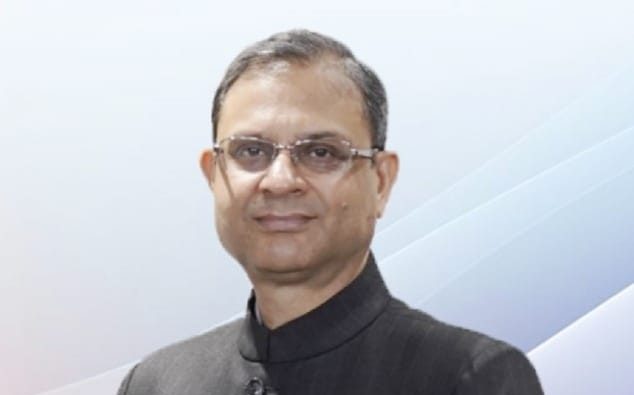
The Reserve Bank of India (RBI) is positioning fintech not merely as an industry under regulation but as a strategic partner in building the next generation of India’s financial system, with artificial intelligence (AI), quantum technology and tokenisation emerging as key areas of focus.
Reserve Bank of India Governor Sanjay Malhotra said the central bank remained committed to supporting the fintech industry in building “trusted, connected, global systems for inclusive finance” while maintaining the stability, efficiency and inclusiveness of the financial system.
Speaking at the Global Fintech Festival 2026, Malhotra said the RBI viewed regulation and innovation as mutually reinforcing rather than opposing forces.
RBI deepens fintech institutional support
The RBI has expanded its institutional mechanisms for fintech innovation through initiatives including its Regulatory Sandbox and the annual HaRBInger global hackathon.
The Regulatory Sandbox, now available on-tap with an open cohort, provides innovators with a controlled environment to test products and solutions under real-world conditions and with customers before full-scale deployment.
The HaRBInger hackathon, meanwhile, has evolved into a platform for fintech innovators to work on real-world challenges facing the financial sector.
The central bank has also introduced a Self-Regulatory Organisation (SRO) framework for the fintech sector to promote responsible conduct, develop industry-led baseline standards, build capacity and facilitate engagement between the industry, regulators and policymakers.
The RBI recognised the first fintech SRO two years ago at the Global Fintech Festival. Malhotra announced that the United FinTech Forum has now been recognised as the second SRO for the sector.
Digital rails for next-generation finance
The RBI is simultaneously building digital public infrastructure that fintech companies can use to expand access to financial services.
The Unified Lending Interface (ULI) is creating common digital rails for frictionless and consent-based credit delivery, while the Account Aggregator framework enables fintech companies to build services around consent-based access to financial information.
The central bank is also deploying technology to tackle the growing threat of digital financial fraud. MuleHunter.ai, the RBI’s digital fraud-detection system, uses data and AI to strengthen fraud prevention and protect the integrity of the digital payments ecosystem.
The proposed Digital Payments Intelligence Platform (DPIP) is expected to further strengthen these efforts.
CBDC moves from payments to programmable finance
The RBI is also expanding its exploration of the use cases for the central bank digital currency (CBDC).
Its ongoing pilots on programmable CBDC are examining targeted government benefit transfers, including potential applications linked to the Pradhan Mantri Garib Kalyan Anna Yojana, alongside other use cases.
Tokenisation is another area where the central bank is testing the architecture of future financial markets.
The RBI has already experimented with Certificates of Deposit issued through the Unified Markets Interface using wholesale CBDC. At the Global Fintech Festival, it announced the next step, tokenisation of corporate bonds with settlement through CBDC, as a joint initiative with the Securities and Exchange Board of India (SEBI) and other stakeholders.
The move could provide an important test case for how tokenised securities and CBDC-based settlement could eventually reshape capital-market infrastructure.
Risk-based regulation for fintech
Malhotra said the RBI’s regulatory philosophy would remain proportionate and activity-based, based on the principle of “same activity, same risk, same regulatory treatment”, irrespective of which institution performs the activity.
The approach would allow lighter regulation where innovation is still nascent and risks remain contained, with stronger intervention when activities reach a scale that could create systemic risks or raise consumer-conduct concerns.
This approach is significant for India’s rapidly evolving fintech ecosystem, where technology-driven financial services increasingly overlap with traditional banking, payments, lending and capital markets.
Preparing for AI and quantum risks
The RBI is also seeking to anticipate rather than simply respond to emerging technology risks.
The recommendations of the RBI’s FREE-AI Committee, the draft framework on Model Risk Management and work towards a comprehensive AI governance framework for the financial sector are part of this effort.
The recently constituted Quantum Secure and Adaptive Financial Ecosystem (Q-SAFE) Committee is examining the resilience of the financial system against risks arising from quantum technology.
Malhotra said the objective was to ensure India remains not only an adopter of emerging technologies but also a leader in shaping trusted, inclusive and responsible digital finance.
From potential to global impact
The RBI Governor said India’s fintech experience demonstrated that technology could deliver financial services at extraordinary scale, but argued that such outcomes depend on deliberate design, sustained dialogue between regulators and innovators and a shared vision of the financial system.
He urged fintech innovators to view trust not as a constraint on innovation but as its purpose.
For India’s fintech ecosystem, that message points to a regulatory model in which innovation is encouraged, but scale, consumer protection, systemic stability and trust increasingly determine how far and how fast new technologies can be deployed.