


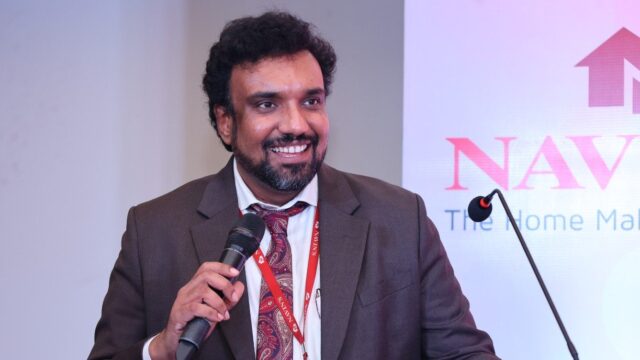
Sustainable buildings are increasingly being assessed not only for their environmental benefits but also for their long-term financial returns, Navin’s Managing Director Navin Kumar, said at the CII IGBC Green Tamil Nadu Summit 2026.
Speaking in a session on the business case for green buildings, Kumar discussed the additional upfront investment involved in sustainable construction and the potential savings from lower energy and water consumption over the life of a project.
Upfront costs vary with green ambitions
Kumar said estimates of the additional capital expenditure required for green buildings vary significantly. While some estimates put the incremental cost at around 0.5%, his own estimate is closer to 3–4%.
For projects targeting higher levels of green certification, including platinum ratings, the additional investment could rise to as much as 10%, he said.
However, the higher upfront cost needs to be assessed against the savings generated over the medium and long term.
Kumar said that when the cost of maintaining a conventional building is compared with that of a green building, the latter can generate a net surplus over time, primarily through savings in energy and water consumption.
Green financing can lower borrowing costs
Financing costs can also strengthen the business case for sustainable buildings, according to Kumar.
“Today, financial institutions offer credit at slightly discounted rates for borrowing for a green building versus borrowing for a non-green building,” he said.
He cited preferential interest rates ranging from 0.1% to 0.4% below standard borrowing costs, while noting that some financing schemes offer even greater benefits.
Higher density creates sustainability challenges
Kumar also highlighted the challenges developers face as projects become larger and move towards higher levels of environmental performance, including platinum certification and net-zero standards.
As development density increases, the space available for sustainability measures such as rainwater harvesting systems and solar installations can become more constrained. Developers therefore need to factor these requirements into project planning at an early stage, he said.
Net-zero standards to shape next phase
Kumar said the real sustainability challenge extends beyond obtaining basic green-building certification.
“Moving from basic green certification to Net Zero Water and Zero Waste is where true sustainability begins,” he said.
The comments come as the real estate industry increasingly looks at sustainability not only through the lens of environmental performance but also through operating costs, financing and long-term asset value.
Navin’s is a Chennai-based real estate brand with more than 130 projects across the city.