


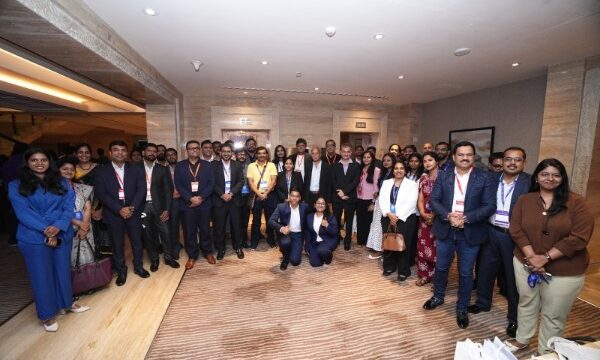
Skills Development Network (SDN) Trust convened a CHRO Roundtable in Chennai with more than 20 senior HR and talent leaders to discuss how Tamil Nadu can strengthen the link between skilling, assessment and employer demand.
The roundtable, supported by Wadhwani Foundation, was held as part of the American Management Association (AMA) South Asia CHRO Forum at ITC Grand Chola, Chennai. Senior HR leaders from organisations including ESAB, Savista, Hinduja Leyland Finance, RBL Bank, Yubi, Infosun Technologies, Greif and Rane Group participated.
Closing the talent-to-jobs gap
Tamil Nadu’s TNSkill Registry has more than 17.56 lakh professionals, making the state one of India’s largest skilled talent pools. However, participants noted that the key challenge is ensuring that available talent matches the specific skills, roles and locations required by employers.
Hiring requirements can vary significantly across cities, industries and even companies within the same sector. The discussion therefore focused on moving towards a demand-led skilling model in which employers articulate hiring requirements before training programmes are designed.
The proposed sequence is to identify actual and emerging employer demand, translate it into role and skill requirements, train and assess candidates against those requirements and connect job-ready talent with local employers.
Focus on hyper-local talent ecosystems
SDN Trust presented its Hyper-Local Talent Ecosystem model, under which employers define hiring needs upfront and training and assessment are aligned with actual roles.
The model is being implemented across talent ecosystems in Delhi NCR, Bengaluru, Ahmedabad, Noida, Lucknow, Vijayawada, Jaipur, Mumbai, Pune, Chennai, Kolkata, Chandigarh and Bhopal.
It brings together employers, institutions and job seekers through Wadhwani JobReady for employability skills, Wadhwani JobConnect for connecting job-ready candidates with local opportunities, and Wadhwani JobRise for supporting early-career professionals after joining the workforce.
“Building job-ready talent is a shared responsibility; it cannot rest with the skilling ecosystem alone,” said Skills Development Network (SDN Trust) EVP Sunil Dahiya. “It requires continuous engagement with employers from understanding evolving demand and validating skills to creating clearer pathways into employment.”
From training numbers to employment outcomes
Participants also discussed the gap between candidate potential and workplace readiness, along with the time and cost employers incur after hiring to make new employees productive.
“Employers don’t necessarily need a larger talent pool; they need a more relevant and job-ready talent pool,” said Skills Development Network (SDN Trust) CHRO Gaurav Saini.
He said a hyper-local ecosystem can help employers identify their current and future requirements more precisely and prepare, assess and connect talent against those needs.
For Tamil Nadu, stronger links between employers, educational institutions, skilling providers and job seekers could help align the state’s distributed talent pool with hiring requirements across its economic and industrial clusters.