


The Reserve Bank of India (RBI) has identified five priorities for policymakers to strengthen financial stability as the global financial system faces increasingly interconnected and cross-border risks.
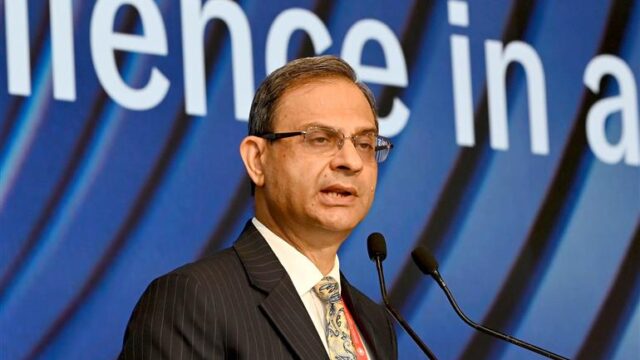
Speaking at the Fifth Kautilya Economic Conclave in a special address on preserving financial stability in an evolving world, RBI Governor Sanjay Malhotra said financial stability was not about preventing shocks but about strengthening the financial system’s resilience to withstand and contain their impact.
Building resilience against unpredictable shocks
Malhotra said shocks could be endogenous or exogenous and the objective should be to build a financial system capable of providing financial services even under severe stress.
He said the next financial crisis may not originate in a bank or even within the financial sector. Geopolitical events, cyberattacks or technological failures could affect the financial system through multiple channels.
Policymakers, therefore, need to better understand networks of dependencies and contagion channels, with scenario analysis becoming a cornerstone of risk management.
Better data needed to assess systemic risks
The RBI Governor said monitoring and assessment frameworks need to improve, supported by better and more granular data.
Data relating to non-bank financial institutions (NBFIs), interconnected exposures, technology dependencies and cross-border positions remains fragmented, he said.
As the financial system becomes more interconnected, the quality of available data will increasingly determine the quality of risk assessment, according to Malhotra.
Resilience must extend beyond banks
Malhotra said financial resilience needs to be system-wide.
While a strong banking system is necessary, he said resilience was also required across NBFIs, financial markets, payment systems, technology infrastructure, critical third parties and cross-border financial networks.
“Financial instability anywhere can become a threat to financial stability everywhere,” he said.
Innovation must preserve trust
The fifth priority relates to financial innovation. Artificial intelligence, tokenisation and new forms of financial intermediation could improve efficiency, but Malhotra said innovation must preserve the foundations of trust in the financial system.
These include sound institutions, settlement finality, singleness of money and financial integrity.
He said building a resilient financial system would require resilient institutions, better data, deeper markets, credible safety nets, effective resolution mechanisms and proactive, forward-looking and proportionate regulation and supervision.
Five emerging global risks
Malhotra also highlighted five major emerging risks to global financial stability.
The first is elevated global debt. Rising global debt-to-GDP ratios, shorter maturity periods and higher sovereign bond yields could narrow fiscal space for governments and increase debt-servicing pressures for corporates. Emerging markets with high sovereign debt held by non-residents could also face capital outflows if carry trades unwind.
The second risk is stretched asset valuations, particularly those linked to artificial intelligence. Malhotra said the AI investment cycle had supported global financial markets, but a slowdown in investment or earnings could trigger sharp repricing of assets in the AI value chain. Higher leverage could amplify such corrections.
The third is elevated leverage among hedge funds, option sellers, exchange-traded funds and other NBFIs in equity and bond markets. Growing bank-NBFI interconnectedness could transmit stress across institutions and markets if financial conditions tighten.
The fourth risk is private credit, where some high-profile defaults have raised concerns about lending standards.
The fifth is cyber risk compounded by AI. Malhotra said AI had heightened cyber risks, model risk, third-party dependence and the erosion of human oversight and accountability. The interconnected nature of the global financial system means weaknesses in cyber capabilities in one jurisdiction could have implications beyond its borders.
Multiple risks could amplify financial stress
Malhotra noted that the financial system had absorbed the supply shock from the West Asia conflict, although the global economic environment remained challenging and the conflict had added to inflationary pressures and financial vulnerabilities.
He cautioned that while each emerging risk may not individually constitute a major concern at present, their simultaneous occurrence could place significant pressure on the global financial architecture.