


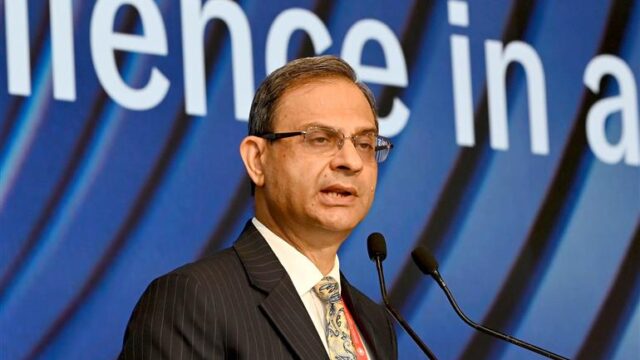
The Reserve Bank of India (RBI) will enable interoperability among NBFC account aggregators, allowing customers to aggregate financial information held across different account aggregators through a single account aggregator.
RBI Governor Sanjay Malhotra said the measure, aimed at improving the flow and accessibility of financial information, will be implemented by December 31, 2026.
The central bank will also facilitate Securities and Exchange Board of India (SEBI)-regulated depositories to include information relating to deposit accounts in their consolidated account statement (CAS).
RBI sets up financial markets advisory forum
The RBI will also constitute a technical consultative committee for financial markets in response to rapidly evolving financial market dynamics.
The committee will provide a structured forum for engagement with market participants and other stakeholders on policy and operational matters relating to financial markets.
The move is intended to strengthen the feedback mechanism between the central bank and participants across financial markets as domestic and global market conditions become increasingly complex.
Global risks weigh on outlook
Malhotra said geopolitical developments, tariff-related uncertainties, elevated bond yields and the risk of an unwieldy correction in AI stock valuations are keeping global economic sentiment edgy and contributing to risk-off sentiment towards emerging market economies.
These factors are weighing on India’s domestic growth and inflation outlook, but the inherent resilience of the Indian economy is helping it navigate the challenging environment, he said.
The RBI Governor said the central bank would continue to implement policies aimed at strengthening this resilience, with price and financial stability remaining essential for sustainable long-term growth.
India’s current account deficit remains manageable
India’s current account deficit (CAD) remained modest and well below sustainable levels in Q1 FY2026-27 despite external shocks, supported by a robust services trade surplus and net remittance receipts.
However, the CAD widened in July 2026 as the merchandise trade deficit increased.
India’s merchandise trade deficit rose to $58.7 billion during July-August 2026, compared with $55.1 billion during July-August 2025, mainly due to higher imports of electronic goods and crude oil.
The RBI said moderation in global trade growth, elevated energy prices and persistent trade policy uncertainties could pose upside risks to India’s CAD during FY2026-27.
At the same time, buoyant services exports, robust inward remittances and implementation of the India-UK trade deal and other recent bilateral trade agreements are expected to provide resilience to the external sector.
System liquidity rises sharply
System liquidity increased substantially during August and September following measures undertaken to attract capital inflows.
Measured through the net position under the liquidity adjustment facility (LAF), system liquidity averaged a surplus of ₹5.9 lakh crore per day since the last MPC meeting in August 2026.
Measures to absorb liquidity, combined with quarterly advance tax outflows, moderated the surplus during September.
With liquidity remaining in surplus, the weighted average call rate largely traded in the lower half of the policy corridor during the recent period.
Short-term money market rates, particularly rates on commercial papers and certificates of deposit, also moderated significantly during August and September.
Bond yields rise amid global pressures
Government securities (G-sec) yields hardened from mid-August through September amid renewed geopolitical tensions in West Asia, rising global bond yields and higher crude oil prices.
Transmission to the credit market showed divergent movements in deposit and lending rates during July-August.
Despite these movements, the RBI said credit growth remains robust and broad-based across sectors, indicating continued underlying demand for bank credit.