


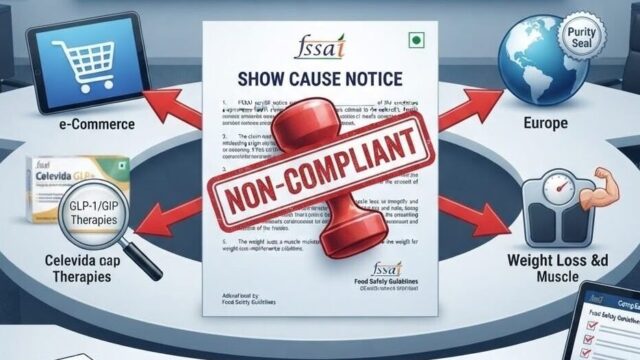
The Food Safety and Standards Authority of India (FSSAI) has issued show cause notices to several food business operators and major e-commerce platforms over allegedly misleading advertising and health claims associated with Celevida GLP+, tightening its scrutiny of products positioned around weight management, muscle preservation and GLP-1/GIP therapies.
The notices have been issued to Dr Reddy’s Laboratories, Nestle Health Science Ltd, Tirupati Wellness Pvt Ltd, as well as Flipkart India, Amazon Seller Services and Netmeds Healthcare Ltd.
The action follows FSSAI’s observations on how Celevida GLP+ was described and promoted across product packaging and online platforms.
Medical association under scanner
FSSAI has raised concerns over the use of the product name Celevida GLP+ alongside the description “High Protein Support for Lean Muscle Preservation during GLP-1/GIP Therapies”.
According to the regulator, the manner in which the product was presented could create an association with specific medical therapies and imply suitability for consumers undergoing such therapies.
The regulator also flagged claims including “Helps Maintain Lean Muscle”, “support muscle strength” and “preserve lean mass”, saying these could suggest that the product helps prevent loss of lean body mass during weight loss or GLP-1/GIP therapy.
‘Complete nourishment’ claim questioned
FSSAI has also objected to descriptions such as “Complete Daily Nourishment” and “dependable nutrition in every serving”.
The regulator viewed such claims as potentially portraying the product as a meal replacement or a source of complete nutrition, which could mislead consumers about the nature and nutritional role of the product.
The observations underline FSSAI’s concern over the distinction between legitimate nutritional claims and representations that may give consumers an impression of therapeutic or comprehensive health benefits.
‘Imported from Europe for purity’ claim flagged
The regulator has separately questioned the claim “Imported from Europe for purity”, observing that foreign origin by itself cannot establish superior protein purity.
FSSAI has also raised concerns over the phrase “Contains 100% RDA BCAA”, finding the use of “100%” ambiguous and directing that such usage should not appear on the product’s packaging and promotional material in a manner that could mislead consumers.
Disclaimers may not override overall impression
FSSAI has also rejected the argument that a disclaimer stating that “Celevida GLP is only a brand name and does not represent its true nature” would be sufficient to address the concerns.
The regulator’s observations indicate that a disclaimer may not cure a potentially misleading overall presentation when the primary branding, claims and promotional messaging collectively create a different impression for consumers.
FSSAI has also flagged the way individual health benefits were presented. Claims relating to muscle strength, immunity and energy metabolism appeared prominently on the front of the pack, while explanatory information was placed separately, including on the side of the packaging.
E-commerce platforms also face scrutiny
The inclusion of Flipkart, Amazon Seller Services and Netmeds in the regulatory action highlights the growing scrutiny of health and nutrition products sold through digital marketplaces.
With consumers increasingly relying on online product descriptions and promotional claims before purchasing health-focused products, regulators are examining not only the underlying product but also how its benefits are communicated across digital sales channels.
Companies asked to explain
FSSAI has directed the concerned food business operators to submit explanations as to why legal action should not be initiated against them under the Food Safety and Standards Act, 2006, and the rules and regulations made under it.
The notices reinforce FSSAI’s increasingly stringent approach towards health and nutrition products that use medical terminology, weight-loss associations, muscle-preservation claims or broad nutritional descriptions.
The action also signals that product branding, packaging and digital marketing will increasingly be examined together when determining whether consumers could be left with a misleading impression about the nature, efficacy or intended use of a food product.