


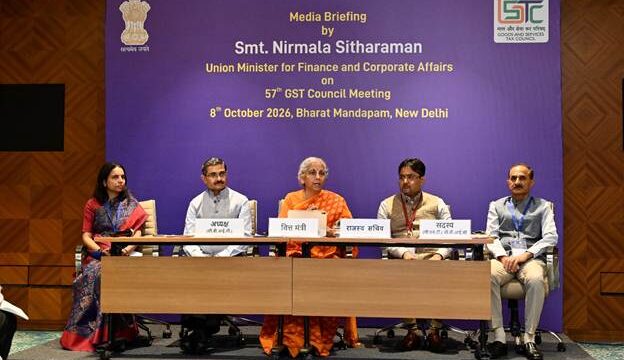
The 57th GST Council meeting has recommended a simplified registration mechanism for small suppliers selling goods through electronic commerce operators.
Under the proposed arrangement, eligible sellers could register in states where they do not have a physical presence by declaring an e-commerce operator’s warehouse in the state as their principal place of business. The facility would be subject to specified conditions, including a monthly limit of ₹2.5 lakh on ITC passed on, excluding stock transfers between distinct persons.
Registration would be granted automatically through the system, subject to the prescribed conditions.
This builds on the automatic registration route under Rule 14A for eligible applicants that do not intend to pass on ITC exceeding ₹2.5 lakh per month.
The commercial significance is potentially substantial
Small sellers often face administrative and operational hurdles when expanding into new states. A requirement to establish a conventional business presence in every market can make interstate expansion expensive, particularly for businesses selling relatively small volumes.
The proposed mechanism could make it easier for eligible sellers to use e-commerce platforms to reach customers in additional states without setting up a separate physical establishment in each location.
For online marketplaces, a broader pool of sellers could improve product availability and expand regional sourcing. For small manufacturers and traders, the change could widen their addressable market.
The benefits will depend on the final eligibility conditions and how smoothly the registration system accommodates sellers using warehouses operated by e-commerce platforms.
Easier registration and cancellation could reduce administrative friction
The Council has recommended clearer documentation requirements for GST registration, changes to the registration application form and a more user-friendly portal with prescribed document options and contextual guidance.
These measures aim to reduce rejections and repeated queries arising from incomplete or incorrect applications.
The Council has also proposed automatic acceptance of most amendments to registration particulars, with an exception for changes relating to the principal place of business. For taxpayers registered through the specified automatic route, amendments including changes to the principal place of business would be accepted automatically.
Cancellation reforms important
The proposed cancellation reforms are equally relevant. In the first phase, eligible cancellation applications would be accepted automatically once pending returns are filed and outstanding dues are paid. The arrangement would cover specified categories of taxpayers based on their ITC position and compliance with final-return requirements.
A second phase would extend automatic cancellation to all eligible applications once the prescribed compliance conditions are met.
For businesses, the benefit is less time spent interacting with the tax administration for routine changes. Faster updates to registration details could help companies maintain accurate records and reduce the risk of operational delays caused by pending applications.
Simpler cancellation procedures could also help businesses that have ceased operations exit the GST system more efficiently, provided they settle their outstanding obligations.
The proposed system-based cancellation and restoration mechanisms for specified defaults could make enforcement more consistent by linking action to defined compliance failures and subsequent correction.