


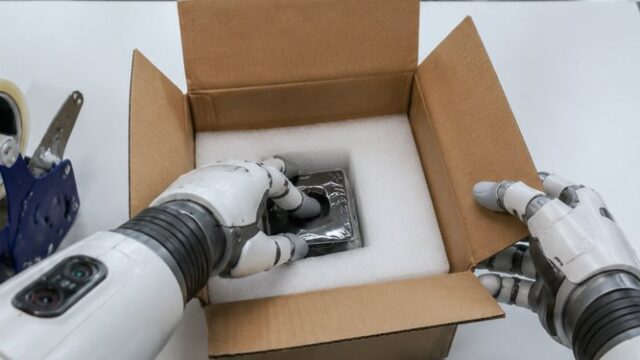
Inner Sky Labs, the Indian artificial intelligence company behind children’s companion robot Miko, has unveiled a comprehensive foundation model stack designed to help machines perceive their surroundings, make decisions and execute physical actions while maintaining independent safety controls.
The launch comes as the Mumbai-based startup moves towards closing a ₹300 crore funding round involving existing investors YourNest Venture Capital and Keshav R. Murugesh, alongside new global investors.
The platform targets the emerging physical AI market, where artificial intelligence systems are integrated into robots and machines that operate in real-world environments, including factories, warehouses, hospitals, farms and homes.
Unlike conventional AI models that primarily process language and digital information, physical AI systems must interpret their surroundings, anticipate the consequences of their actions and interact safely with people and objects.
Inner Sky Labs has developed a stack combining perception models, action models and a dedicated safety system called Kavach. The company said the complete platform is already operating in factories, classrooms and consumer products, and is available to qualified partners by invitation.
Physical AI targets the real-world economy
The company argues that AI’s next major productivity gains will come from machines capable of working alongside people in physical environments.
While large language models have transformed how businesses process information and automate digital tasks, machines operating in industrial and other real-world settings face a different challenge: they must understand what is happening around them and respond appropriately to changing conditions.
Inner Sky Labs has structured its technology around these requirements, allowing customers to deploy individual models or integrate the complete stack into their applications.
Drishti, Shruti and Sparsh build machine perception
The first component comprises perception models designed to help machines interpret their environments through different sensory inputs.
The Drishti series of vision models processes visual information, enabling machines to interpret scenes and identify relevant objects and activities. The Shruti series focuses on audio, helping machines understand spoken instructions and recognise sounds associated with events in their surroundings.
The Sparsh models address tactile perception, giving robotic systems the ability to interpret touch and adjust how they interact with objects.
This capability could be particularly useful in applications involving delicate or irregularly shaped objects, where the amount of force applied can determine whether a task is completed successfully.
Together, the three model families are intended to provide machines with a more comprehensive understanding of their operating environments rather than relying on isolated sensors.
Kriya, Prana and Karma enable action and planning
The platform’s action models, Kriya, Prana and Karma, are designed to generate physical actions and help machines anticipate the likely consequences of their movements.
The models support activities such as reaching, gripping, walking and flying, depending on the application and machine being deployed.
An important feature is the ability to predict what could happen after an action is initiated. A robotic system, for instance, may need to assess whether moving an arm could cause a box to slip or create a collision risk for someone nearby.
Kavach provides an independent safety layer
The most distinctive component of the platform is Kavach, a safety system designed to evaluate proposed actions before allowing a machine to execute them.
The system operates independently of the perception and action models, with the authority to block a movement that violates predefined safety requirements.
For example, before permitting a robotic arm to move across a factory floor, Kavach can check whether the intended area is clear, whether the proposed speed is within permitted limits and whether the movement remains inside its designated operating zone.
Miko experience forms the foundation
Inner Sky Labs brings experience from developing Miko, its companion robot designed to engage and educate children while supporting their social-emotional development.
Miko has been deployed in more than 140 countries, giving the company a decade of experience in building AI-powered products intended to interact directly with people.
The company said safety principles developed for Miko have informed the design of its broader physical AI platform.
In an independent evaluation by BDO’s cyber security practice, Miko’s safety system reportedly detected every unsafe prompt across seven public AI safety benchmarks and ranked first in identifying unsafe AI responses, outperforming four widely used commercial AI models.
Inner Sky Labs Co-founder and Chief Executive Officer Sneh Vaswani said the company’s experience with Miko had helped establish its approach to building machines that people can trust.
“Every robot company will eventually have to answer one question: why should anyone trust this machine near a person,” Vaswani said.
He added that the company was extending the principles developed for Miko to a wider range of machines, including industrial robots and other autonomous systems.