


India’s proposed $4 billion greenfield shipyard at Thoothukudi in Tamil Nadu has moved closer to implementation, with South Korea’s HD Korea Shipbuilding & Offshore Engineering (HD KSOE) reiterating its intent to participate as a primary strategic investor. The project is envisaged to have an annual shipbuilding capacity of approximately 2.5 million gross tonnage (GT), subject to validation through a Detailed Project Report (DPR).
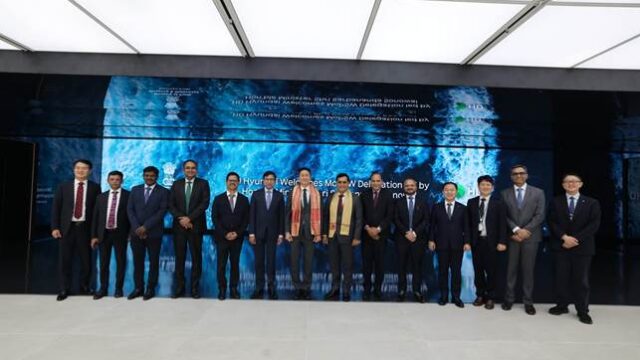
Union Minister for Ports, Shipping and Waterways Sarbananda Sonowal discussed the project with HD Hyundai Chairman Chung Ki-sun in Seoul during his four-day visit to South Korea to strengthen bilateral cooperation in shipbuilding and maritime industries.
The two sides agreed to establish a joint working group to oversee project development, work towards finalising a joint venture structure and aim to complete the DPR within six months. The report will cover the proposed vessel mix, production capacity, infrastructure requirements, project costs and implementation schedule.
The proposed shipyard is being developed under the Government of India’s Shipbuilding Development Scheme. If implemented as envisaged, it is expected to become India’s largest commercial shipyard, expanding domestic vessel-building capacity and strengthening the country’s competitiveness in the global shipbuilding industry.
Domestic vessel demand offers growth opportunity
The project comes as India seeks to expand its domestic shipbuilding capabilities and reduce dependence on foreign shipyards for vessel construction.
Sonowal said Indian public agencies were looking to acquire more than 400 vessels in the coming years, providing a potential domestic order pipeline for the proposed facility alongside export opportunities.
“The domestic market in India is booming right now. Our public agencies are looking to acquire more than 400 vessels in the coming years,” Sonowal said.
He added that the Thoothukudi shipyard could play a significant role in meeting part of this demand while helping HD KSOE expand its presence in India through strategic partnerships, technology collaboration and localised manufacturing.
The scale of the proposed investment and its planned capacity could position the facility as a significant addition to India’s maritime industrial infrastructure. However, the final investment structure, equity participation and implementation arrangements remain subject to due diligence and the requisite approvals.
Joint venture structure and infrastructure planning next
National Shipbuilding & Heavy Industries Park, Tamil Nadu Ltd (NSHIP-TN) and HD KSOE reiterated their shared intent to take the project forward.
NSHIP-TN will facilitate the availability of suitable waterfront land, infrastructure and utilities, besides coordinating with government authorities for statutory approvals in accordance with applicable laws and procedures.
Preparatory activities will include site assessments, infrastructure planning and preliminary dredging and reclamation studies to establish project readiness.
HD KSOE, the shipbuilding arm of HD Hyundai, is expected to contribute expertise in shipyard design, construction, advanced manufacturing and operations. The proposed partnership will combine South Korea’s established shipbuilding capabilities with India’s industrial base and growing maritime requirements.
India–South Korea maritime cooperation deepens
The discussions build on the India–Republic of Korea Comprehensive Framework for Partnership in Shipbuilding, Shipping and Maritime Logistics adopted in April 2026.
The two sides had signed a memorandum of understanding on April 20, 2026, between HD KSOE and NSHIP-TN on the sidelines of South Korean President Lee Jae Myung’s state visit to India. HD KSOE acknowledged the enabling conditions created by the Indian government for implementing the project.
Beyond the construction of the shipyard, the partnership envisages technology transfer, workforce training and knowledge exchange, including potential collaboration with Indian industries and academic institutions. These initiatives are intended to strengthen domestic shipbuilding capabilities and create skilled employment.
“This partnership will be a truly vital and defining cornerstone of the broader India-Korea relationship,” Sonowal said, emphasising the potential to combine South Korea’s technological expertise with India’s economic scale.
The proposed Thoothukudi facility is positioned as a flagship initiative under the India–Republic of Korea Special Strategic Partnership. Its next major milestone will be the completion of the DPR and agreement on the joint venture structure, which will provide greater clarity on the investment, project configuration and implementation timeline.