

The Indian Institute of Technology Madras (IIT Madras) has completed a drinking water treatment and solid waste management project in Vallipuram village panchayat in Chengalpattu district, Tamil Nadu, introducing technology-enabled solutions to improve public health, sanitation and environmental sustainability.
The project was implemented under the Clean and Healthy Village Development Programme of AquaMAP, a Centre for Water Management and Policy at IIT Madras. The Lien Environmental Fellowship of Singapore-based Lien Foundation provided financial support through Nanyang Technological University (NTU), Singapore.
The initiative has directly benefited more than 350 people through interventions at two government schools and the local Primary Health Centre (PHC). Vallipuram has a population of around 2,000 across four hamlets and six wards. The PHC also serves residents from 14 neighbouring villages, extending the reach of the drinking water intervention.
The project handover ceremony was held in Vallipuram on October 28, bringing together representatives of the funding partners, district administration, panchayat and other participating organisations.
IoT-enabled water quality monitoring
A key component of the initiative is the establishment of three drinking water treatment facilities at the Government Primary School, Government High School and Primary Health Centre in Vallipuram.
The two schools have been equipped with ultrafiltration and ultraviolet (UV) treatment systems, while the PHC uses reverse osmosis (RO) and UV technology.
To strengthen water quality monitoring, the project installed Internet of Things (IoT)-enabled sensors across five water tanks and the treatment systems. The sensors track parameters including water flow, pH, turbidity and total dissolved solids (TDS), with the data transmitted to an application for remote monitoring.
Regular laboratory testing and sensor calibration support the monitoring system, helping the institutions maintain water quality and identify operational issues.
The decentralised approach provides treated drinking water at the point of use, reducing the need for students and healthcare visitors to depend on alternative sources.
“The project has helped provide these essential services to the students and villagers of Vallipuram Panchayat. We believe that this collaborative model has immense potential for replication across Tamil Nadu and the rest of India,” said IIT Madras, Coordinator of AquaMAP, Prof. Ligy Philip.
Prof. Ligy Philip and Prof. B. S. Murty coordinated the project, which combines infrastructure development with technology, community engagement and capacity building.
Waste collection and recycling infrastructure
The project also introduced a waste management system designed to improve household waste collection, recycling and disposal practices.
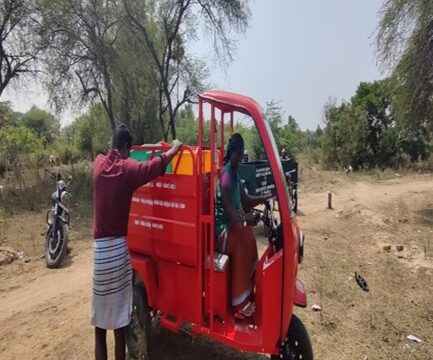
A battery-powered vehicle was provided for collecting and transporting waste. A solid waste management facility was established to recover inorganic waste and process organic waste through composting.
Community awareness campaigns encouraged residents to segregate waste at source, reduce plastic consumption and avoid burning waste.
Schools and community groups were also involved in awareness programmes covering handwashing, cleaning drinking water bottles, safe water consumption and responsible waste disposal. Capacity-building initiatives engaged young people, women and other community members to encourage sustained participation in maintaining village sanitation.
Impact assessment shows behavioural changes
The project’s final impact assessment found that all surveyed school students and PHC visitors used the treated drinking water and expressed satisfaction with its quality and taste. The availability of treated water at school also meant students no longer needed to bring drinking water from home.
The assessment found that 78.3% of surveyed community members reported segregating household waste, while 83.33% said they did not burn non-biodegradable plastic waste.
Awareness campaigns and encouragement from sanitation workers were identified as important factors supporting waste segregation.
Schoolchildren also collected 300 kg of non-biodegradable waste in just two days, demonstrating the potential of school-led initiatives to influence household practices and strengthen environmental awareness.
Panchayat to maintain facilities
The project was implemented in collaboration with Vallipuram Panchayat, local schools, the PHC, Tamil Nadu government officials and other organisations.
Sobiya Amul Parthasarathy, President of Vallipuram Panchayat, said the intervention had improved access to safe drinking water, waste management and smart water quality monitoring, while encouraging the community to adopt cleaner and healthier practices.
Vallipuram Government High School Headmistress Geetha B said the initiative had helped promote safe drinking water, hand hygiene and responsible waste disposal among students.
Following the handover, the panchayat will be responsible for supporting the continued operation and use of the facilities. Regular maintenance of treatment systems, water quality testing, sensor calibration and continued community engagement will be essential to sustaining the project’s benefits.
The initiative offers a potential model for other villages seeking to combine decentralised water treatment, digital monitoring and community-based waste management. Its long-term effectiveness will depend on the ability of local institutions to maintain the infrastructure and sustain the behavioural changes achieved during implementation.