


A research study by Goa Institute of Management (GIM), in collaboration with researchers from Amrita School for Sustainable Futures and LITEM, France, has highlighted the role of social innovation in making circular economy initiatives more effective and sustainable.
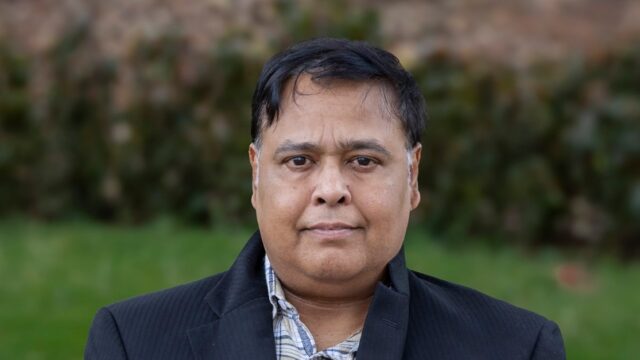
The study, led by Prof. Saswat Barpanda, Associate Professor at GIM, examines how communities, businesses, institutions and governments can work together to translate sustainability ideas into practical solutions with long-term environmental and social benefits.
Published in the international journal Sustainable Development, the research introduces a Social Innovation in Circular Economy System (SICES) model to explain how collaborative initiatives can support the transition towards a circular economy.
Social innovation as a driver of circular economy
A circular economy seeks to move away from the conventional use-and-discard model by promoting the repair, reuse and recycling of resources. It aims to minimise waste, improve resource efficiency and reduce environmental impact.
While social innovation and circular economy approaches are increasingly recognised as important components of sustainable development, there is limited understanding of how the two interact and what mechanisms help translate innovative ideas into effective outcomes.
To address this gap, the researchers reviewed 97 peer-reviewed research papers and developed the SICES model.
The framework highlights that successful circular economy initiatives require more than technological solutions or recycling infrastructure. They also depend on active community participation, collaborative decision-making and institutional support.
Community participation and institutional support
The research emphasises the importance of involving people and organisations in decision-making processes while ensuring that institutions provide the necessary support to sustain new practices.
According to the study, locally developed and community-led solutions can contribute to wider sustainability objectives when backed by appropriate institutional frameworks.
Goa Institute of Management Associate Professor Dr. Saswat Barpanda said: “A circular economy is not achieved through recycling or technology alone. It also depends on people working together, communities shaping solutions, and institutions creating the conditions for those solutions to endure. Our SICES model helps explain how social innovation can connect these elements and turn sustainability ideas into lasting practice.”
Implications for businesses and policymakers
The findings have implications for policymakers, businesses and organisations seeking to incorporate sustainable practices into their operations and development strategies.
The study suggests that sustainability initiatives are more likely to deliver lasting results when local communities are actively involved and receive support from the institutions responsible for implementing and sustaining them.
The framework could also help organisations understand the importance of collaboration, local participation and institutional mechanisms in moving sustainability initiatives from the conceptual stage to long-term implementation.
The research has been co-authored by Dr. Saswat Barpanda of GIM, Dr. Souresh Cornet of Amrita School for Sustainable Futures, Amrita Vishwa Vidyapeetham, Kollam, and Dr. Marc-Antoine Diego Guidi of LITEM, Institut Mines-Télécom Business School, France.
The research team plans to test the proposed SICES model across different communities and settings to assess its applicability in diverse contexts and further strengthen its findings