


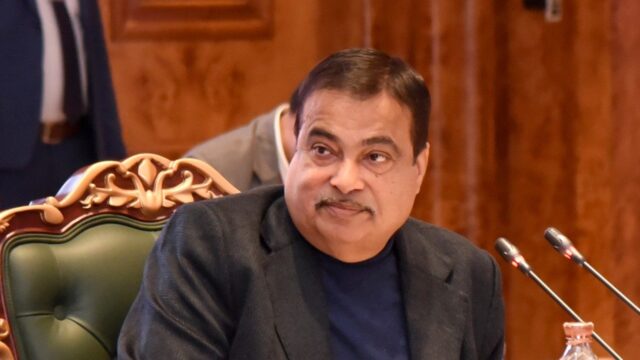
Union Minister for Road Transport and Highways Nitin Gadkari has outlined an ambitious ₹3 lakh crore road infrastructure development programme for Andhra Pradesh, covering greenfield expressways, port connectivity, bypasses and major highway corridors, as the Centre seeks to strengthen the state’s position as a logistics and industrial hub.
Addressing the 31st CII Partnership Summit in Visakhapatnam, Gadkari said world-class road infrastructure was fundamental to India’s economic progress and the holistic development of Andhra Pradesh.
Delivering the keynote address at a session titled ‘Roads to Viksit Bharat: Highways, Logistics, Andhra Pradesh Growth Corridor’, he said the National Highway network in Andhra Pradesh had more than doubled from 4,100 km in 2014 to 8,700 km in 2026.
Of the ₹3 lakh crore worth of highway projects taken up in the state, construction covering 4,750 km has been completed at an investment of ₹60,000 crore. Projects covering another 2,500 km, involving ₹1 lakh crore, are currently under execution, while works spanning 4,600 km worth ₹1.20 lakh crore are expected to commence soon.
Logistics costs fall to 9% of GDP
Gadkari said India’s infrastructure expansion was beginning to deliver economic benefits, particularly through lower logistics costs.
The country’s logistics costs, which were earlier estimated at 16% of GDP, had declined to 9% following improvements in road infrastructure, he said. Lower logistics costs would enhance the competitiveness of Indian exports in international markets.
He attributed the acceleration in infrastructure development to the priority accorded to the sector under Prime Minister Narendra Modi’s leadership, adding that India was setting global benchmarks in road construction and infrastructure development.
Four major corridors to transform connectivity
Several greenfield expressway and highway projects are expected to reshape Andhra Pradesh’s connectivity with neighbouring states, industrial centres and ports.
The 340-km Bengaluru–Kadapa–Vijayawada corridor, being developed at an investment of ₹14,000 crore, is 70% complete and is targeted for completion by December 2027. The project is expected to reduce travel time between Bengaluru and Vijayawada from 12 hours to four hours.
The 460-km Raipur–Visakhapatnam corridor, involving an investment of ₹16,000 crore, is 96% complete. Once operational, it will bring down travel time from 13 hours to five hours and facilitate freight movement from Chhattisgarh and Odisha to Visakhapatnam Port.
Another important project is the six-laning of the 286-km Hyderabad–Vijayawada–Machilipatnam corridor at a cost of ₹12,000 crore. It is expected to reduce travel time between Hyderabad and Vijayawada to 2.5 hours, while the Vijayawada–Machilipatnam journey will take less than an hour.
The proposed 1,100-km Kharagpur–Visakhapatnam–Amaravati corridor, with an investment of ₹71,000 crore, will reduce travel time between Kharagpur and Amaravati from 20 hours to 12 hours.
The Nagpur–Vijayawada and Bengaluru–Chennai expressways are also expected to strengthen the state’s connectivity with major economic centres.
Surat–Chennai Expressway to cut travel time
Gadkari highlighted the 1,100-km Surat–Chennai Expressway, being constructed at an estimated cost of ₹45,000 crore.
The corridor will reduce the distance between North and South India by around 300 km and bring down travel time from 31 hours to 17 hours.
The expressway will pass through Kadapa, Annamayya and Tirupati districts in Andhra Pradesh, providing improved connectivity to the state’s southern regions.
Port connectivity and Amaravati ORR
With Andhra Pradesh possessing a long coastline and several strategically located ports, Gadkari said port-led connectivity would be a key driver of the state’s economic development.
Road projects worth thousands of crores are being undertaken to connect Visakhapatnam, Gangavaram, Kakinada, Machilipatnam and Krishnapatnam ports with the National Highway network.
He also announced that the proposed 195-km Amaravati Outer Ring Road (ORR), connecting NTR, Krishna, Guntur and Palnadu districts at an estimated cost of ₹32,000 crore, would soon receive Cabinet approval.
Bypass roads are also being developed in Visakhapatnam, Vijayawada, Narasaraopet, Paderu and Mantralayam, among other locations, to improve traffic movement and reduce congestion in urban centres.
Alternative fuels to reduce import dependence
Beyond road infrastructure, Gadkari emphasised the need to reduce India’s dependence on imported fossil fuels.
He said the country spends around ₹22 lakh crore annually on fossil fuel imports and is promoting electric mobility, ethanol, biodiesel and green hydrogen to reduce this burden.
Highlighting the emerging role of agriculture in India’s energy transition, he said farmers were increasingly becoming ‘Urjadatas’ and ‘Indhanadatas’ in addition to being ‘Annadatas’, through the production of compressed biogas (CBG) and ethanol from agricultural biomass.
He also highlighted investment opportunities in National Highways Authority of India (NHAI) bonds, which offer investors returns ranging from 8.5% to 18%, according to his address.
The infrastructure expansion outlined at the CII summit is expected to strengthen Andhra Pradesh’s connectivity with major industrial clusters, ports and consumption centres, potentially improving its attractiveness for manufacturing, logistics and export-oriented investments.