


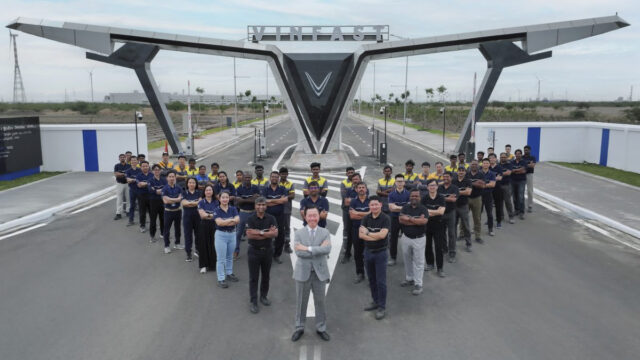
Vietnamese electric vehicle maker VinFast is targeting the creation of 3,000 to 3,500 direct jobs at its Tamil Nadu plant, with 80% of the workforce expected to comprise local fresh graduates and trainees, as the company builds a talent pipeline alongside its manufacturing footprint in India.
The company’s first recruitment drive in Tamil Nadu has already brought in 200 local professionals, while 344 diploma students participated in the selection process through Tamil Nadu’s Naan Mudhalvan skilling initiative.
VinFast’s hiring strategy comes amid a broader race for skilled talent in the global EV industry, where automakers are increasingly seeking expertise spanning software, artificial intelligence, battery technologies, automation and advanced manufacturing.
Building talent in India
Rather than relying entirely on conventional recruitment, VinFast is seeking to develop talent in partnership with educational institutions and skilling programmes.
The company plans to create opportunities for local graduates and trainees to enter its workforce as its Tamil Nadu manufacturing operations scale up. The focus on fresh talent is also intended to build capabilities suited to the changing requirements of EV manufacturing.
The company’s approach reflects the growing importance of integrating academic education with hands-on industry exposure as automakers transition from conventional mechanical engineering towards software-defined and electrified vehicles.
Global EV talent challenge
The shift towards EVs is intensifying competition for engineers and technical specialists. Automakers are increasingly competing not only among themselves but also with technology companies and startups for software engineers, AI specialists, battery experts and skilled technicians.
Germany’s automotive sector faced a shortage of around 80,000 skilled professionals in 2024, while the UK reported more than 14,000 automotive vacancies, with only 27% of its workforce currently qualified to work safely on electric vehicles, according to the press note.
The talent challenge has prompted several automakers to increase spending on workforce training and skills development, particularly in EV technologies and advanced manufacturing.
Education-to-employment pipeline
VinFast is seeking to address the talent challenge by building relationships with educational institutions well before students enter the workforce.
As a member company of Vingroup, Vietnam’s largest private conglomerate, VinFast has access to an ecosystem spanning education, research and technology.
In 2025, VinFast and VinUniversity, Vingroup’s non-profit university, established a strategic partnership focused on battery technologies and advanced materials. The partnership provides opportunities for students and researchers to participate in joint research, technical training and internships with VinFast experts.
VinFast has also collaborated with 19 universities and higher education institutions across Vietnam to standardise training programmes in automotive engineering, mechatronics, electrical and electronics engineering, automation and information technology.
Hands-on EV training
The company provides training equipment and technical repair materials while integrating EV repair modules covering battery systems, powertrains and diagnostic software into academic curricula.
Students can undertake internships at VinFast’s manufacturing complexes and service workshops, with outstanding candidates prioritised for recruitment after graduation.
The company is extending this approach to overseas markets where it is establishing manufacturing operations, linking factory expansion with local talent development.
Talent across the EV value chain
Industry observers believe such industry-academia partnerships could have implications beyond individual companies by helping build specialised talent for the wider EV ecosystem.
For an EV brand to develop sustainably, human resources need to support the entire value chain, from research and development and manufacturing to quality control and aftersales services.
Standardised EV education could help create a generation of engineers equipped with a common technical foundation and familiar with emerging technologies when they enter the workforce.
The model also seeks to narrow the gap between classroom education and industry requirements, creating benefits for companies, educational institutions and students while strengthening the human capital base for the EV industry.