


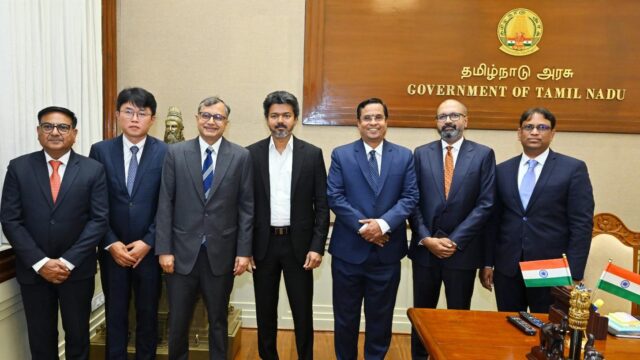
Hyundai Motor India Ltd (HMIL) has reaffirmed its commitment to Tamil Nadu by positioning the state as its flagship electric vehicle (EV) hub for India, while announcing plans to deepen localisation, expand EV manufacturing and launch a major skill development initiative aimed at enhancing the global employability of the state’s youth.
The company said it remains committed to investing over ₹26,000 crore in Tamil Nadu between 2023 and 2032 as part of its previously announced ₹45,000-crore investment plan.
Tamil Nadu at the centre of EV strategy
Hyundai plans to strengthen Tamil Nadu’s position in India’s EV ecosystem through manufacturing, localisation and charging infrastructure investments.
The company has already established the state’s first battery sub-assembly plant for EV powertrains and is actively localising power electronics and other critical EV components. It also plans to launch two new models from its Chennai facility this year, including its first mass-market dedicated electric vehicle.
HMIL has additionally built a DC fast-charging network comprising 39 stations and 78 charging points across Tamil Nadu. The company plans to expand the network across major cities and highways over the next two to three years to support wider EV adoption.
Hyundai Motor India, Managing Director & CEO, Tarun Garg, said, “HMIL’s initiatives will strengthen Tamil Nadu’s leadership in sustainable mobility and automotive excellence, while also accelerating skill development to foster a future-ready workforce. We will roll out two new models from the Chennai facility, including our first mass-market dedicated EV within this year, marking a significant step towards accelerating EV adoption and building a strong EV ecosystem.”
Focus on future-ready skills
In partnership with the Government of Tamil Nadu, HMIL has also announced a skill development initiative that will commence operations in December 2027.
The programme aims to equip youth with expertise in emerging technologies including EVs, hydrogen mobility, robotics, automation, AI-enabled manufacturing and smart manufacturing systems.
The state government will collaborate with ITIs, polytechnics, engineering colleges and skill development institutions to support implementation. The initiative will also focus on workplace communication and language skills to improve employment mobility in India and overseas markets.
Localisation push to create jobs
HMIL plans to increase localisation levels across its EV and internal combustion engine operations from 82% currently to 90% over the next five to six years.
The company also aims to increase procurement from Tamil Nadu-based suppliers by approximately ₹4,000 crore during the period, a move expected to generate around 2,000 additional jobs in the state.
Tarun Garg highlighted the company’s deep roots in Tamil Nadu, noting that Hyundai has exported more than 3.9 million vehicles manufactured in the state to over 150 countries.
The investments, localisation initiatives and skill development programmes are expected to support industrial growth, strengthen the automotive supply chain and further cement Tamil Nadu’s position as a global automotive and mobility hub.