


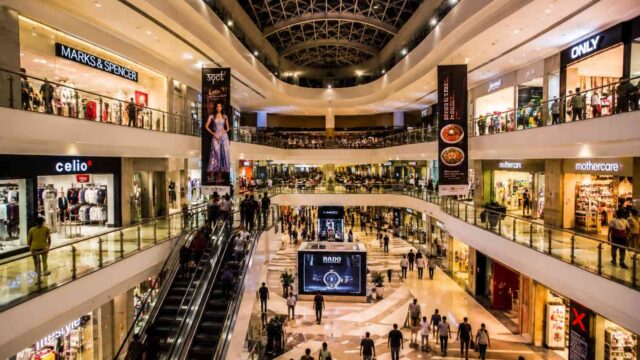
India’s organised retail real estate market is facing an acute shortage of premium mall space, with retailers leasing Grade A mall space at a pace 4.5 times higher than new supply during the first half of 2026, according to property consultancy Anarock.
The top seven cities recorded gross leasing of 4.1 million sq. ft. of Grade A mall space in H1 2026, while only 0.9 million sq. ft. of new supply was added, highlighting a widening structural imbalance between demand and supply.
Demand continues to outstrip supply
Anarock said the supply gap has been building over the years despite robust retailer demand. While new Grade A mall completions recovered to 5.2 million sq. ft. in 2025, leasing surged to a record 13 million sq. ft., underscoring the strong appetite for quality retail spaces.
Both leasing and new supply moderated in H1 2026 from the exceptionally high levels seen in 2025. Leasing declined 24% year-on-year, while new completions dropped 57%, partly due to geopolitical uncertainties that delayed both mall deliveries and retailers’ expansion plans. Even so, demand remained significantly ahead of supply.
Delhi-NCR leads new supply
Among the top seven cities, Delhi-NCR was the only market to witness fresh Grade A mall completions during H1 2026, adding around 0.9 million sq. ft. of space while recording leasing of approximately 1.26 million sq. ft.
Other major markets, including Mumbai, Bengaluru, Hyderabad, Chennai, Pune and Kolkata, registered leasing activity but saw virtually no new Grade A mall supply, forcing retailers to compete for existing premium retail stock.
Anarock’s view
Anarock Group CEO, Retail & CEO, Europe, Middle East & Africa, Anuj Kejriwal, said the country’s retail market has become structurally supply-constrained.
“The supply problem is cumulative and escalating. We now have a chronically supply-constrained market where retailers’ biggest challenge is not drawing shoppers but finding the right spaces to serve them in,” he said.
He added that developing Grade A malls is significantly more complex than other real estate projects due to the need for large land parcels, substantial upfront investments, anchor tenant commitments and longer approval timelines.
Vacancy falls to a 16-year low
The tightening demand-supply equation has pushed vacancy levels in Grade A malls to 6.7% in H1 2026, the lowest since 2010. Vacancy had peaked at 21.5% in 2011 before the pandemic and stood at 15.5% in 2021 after the pandemic.
In contrast, Grade B and Grade C malls continue to report significantly higher vacancy levels ranging between 8% and 35%, indicating that the shortage is confined to well-located, professionally managed premium retail assets.
Outlook
Anarock believes the shortage of premium retail space presents a significant opportunity for developers and institutional investors. However, unless fresh Grade A mall supply accelerates, retailers are likely to face longer waiting periods for prime locations, rising occupancy costs and increased competition for quality retail assets.