


There are very few motorcycle brands in the world that evoke passion, nostalgia and aspiration in equal measure. Royal Enfield belongs to that exclusive league.
As the legendary motorcycle maker celebrates 125 years of uninterrupted production, the milestone is about much more than longevity. It reflects one of the most remarkable brand transformations in the global automotive industry, a journey from near extinction to becoming the world’s largest mid-size motorcycle manufacturer, selling over 1.2 million motorcycles in FY26.
For Royal Enfield, the achievement is not merely about record-breaking volumes. It is about creating a lifestyle, a community and a culture that transcends borders.
Today, Royal Enfield motorcycles are ridden across diverse landscapes, from the frozen terrains of Mongolia to the southernmost roads of Argentina, making it one of India’s most successful premium consumer brands with truly global appeal.
The turnaround story
The contrast could not be starker. When Royal Enfield celebrated its centenary in 2001, the company was struggling for survival. The iconic British-born brand, which made India its home in 1955, faced questions about its future relevance in a rapidly changing motorcycle market dominated by fuel-efficient commuter bikes.
Instead of chasing every emerging trend or entering every motorcycle segment, Royal Enfield chose a different path.
It doubled down on its philosophy of ‘Pure Motorcycling’, building motorcycles that offered character, timeless design and emotional appeal rather than merely transportation.
That strategic clarity has transformed the company into one of the most admired motorcycle brands globally.
Building a cult, not just selling motorcycles
Unlike conventional two-wheeler manufacturers that compete primarily on price, mileage or specifications, Royal Enfield has successfully built a brand centred around experiences.
The company’s legendary rides, rider communities, Motoverse festivals, Himalayan expeditions and the annual One Ride have helped create an emotional bond rarely seen in the automotive industry.
This year alone, the company’s global One Ride celebration is expected to bring together more than 125,000 riders across continents.
The 125th anniversary celebrations include the unveiling of a World Origin plaque at Redditch in the UK, where Royal Enfield’s journey began in 1901, along with the launch of the Classic 650 125th Anniversary Special Edition and global rider events stretching from Europe to Asia.
These initiatives reinforce an important point, Royal Enfield sells belonging as much as motorcycles.
A record-breaking year
FY26 marked Royal Enfield’s strongest-ever financial and operational performance. The company crossed 1.2 million motorcycles in annual sales for the first time in its history.
Domestic sales rose 23% to 11,07,343 units, while exports increased 20% to 1,20,634 units, highlighting the brand’s growing acceptance across international markets.
The festive quarter also became the strongest in Royal Enfield’s history, posting 26% growth, underlining sustained demand in its home market.
The numbers reinforce what industry observers have increasingly recognised—Royal Enfield is no longer a niche motorcycle manufacturer but a global premium mobility brand.
Global ambitions gather pace
International markets are becoming an increasingly important growth engine. Latin America has emerged as one of Royal Enfield’s biggest success stories, registering 20% growth, led by an impressive 71% increase in Brazil, now its second-largest global market and its fastest-growing overseas destination.
The company is treating Brazil as more than an export market.
Royal Enfield plans to establish a deep local presence through manufacturing, dealerships and customer engagement. Its wholly owned assembly facility in Brazil is expected to become operational in 2027, while the dealer network has doubled to 55 outlets over the past two years.
In Europe, the company has also strengthened its standing, emerging as the No. 2 player in the mid-size motorcycle segment, signalling that an Indian-owned motorcycle brand can successfully compete in mature global markets.
Investing for the next decade
Royal Enfield’s confidence is reflected in its manufacturing investments.
The company is investing ₹958 crore to significantly expand its Cheyyar manufacturing facility in Tamil Nadu, increasing total installed production capacity to two million motorcycles annually.
A proposed greenfield manufacturing facility in Andhra Pradesh is expected to support the company’s next phase of international expansion.
These investments underline management’s belief that global demand for premium mid-size motorcycles will continue to grow over the coming decade.
Preparing for the electric era, without abandoning petrol
While many manufacturers are aggressively pivoting to electric mobility, Royal Enfield is taking a measured approach.
Executive Chairman Siddhartha Lal believes the EV transition demands balance rather than haste.
“Move too slowly and you can get obliterated; bet too big too early, or take the wrong turn, and that can be just as fatal,” he says.
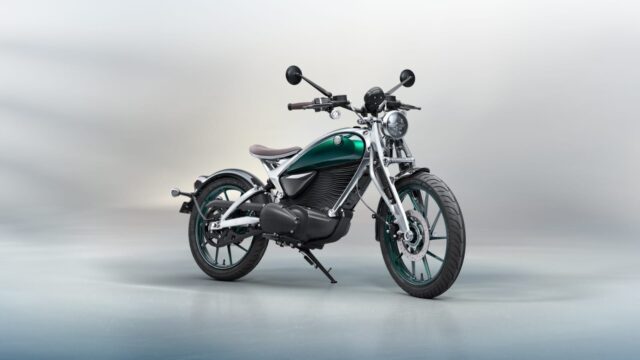
The company’s answer is Flying Flea, a revived historic marque from 1943 that now serves as Royal Enfield’s dedicated premium electric motorcycle platform.
The FF.C6 electric motorcycle has already entered the Bengaluru market, with expansion planned across India and Europe. A scrambler-inspired FF.S6 will follow as part of a broader electric portfolio.
Yet Royal Enfield is equally committed to internal combustion motorcycles.
Management maintains that petrol-powered motorcycles will remain central to the brand for years to come, even as investments continue in electric technologies.
The strategy reflects Royal Enfield’s broader philosophy—embracing innovation without abandoning its heritage.
The power of consistency
According to B. Govindarajan, Managing Director, Eicher Motors and CEO of Royal Enfield, the company’s enduring relevance stems from remaining faithful to its core identity.
“Across generations and geographies, we have stayed true to the philosophy that defines us—Pure Motorcycling. At the same time, we have continued to evolve and welcome new generations of riders without losing sight of who we are,” he says.
That careful balance between tradition and innovation has enabled Royal Enfield to remain aspirational across generations.
Fiercely loyal community
Royal Enfield’s biggest competitive advantage cannot be measured in engine displacement, horsepower or pricing.
Its true strength lies in something far more difficult to replicate, a fiercely loyal community and an unmistakable brand identity.
In an industry often driven by discounting, technology races and frequent model changes, Royal Enfield has shown that authenticity can be a sustainable competitive advantage.
Its motorcycles represent freedom, exploration and individuality, values that resonate with riders across cultures.
As the company enters its next chapter, with expanded global manufacturing, a growing international footprint and an emerging electric portfolio, it appears determined to preserve the essence that made it iconic in the first place.
Few Indian brands have successfully transformed themselves into global lifestyle icons.
Royal Enfield has done exactly that.
And after 125 years, its journey appears far from over.