


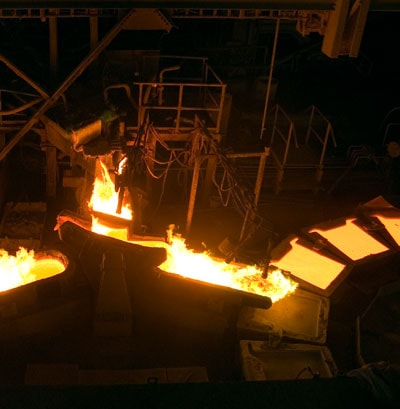
The long-running battle over Vedanta’s controversial copper smelter in Tamil Nadu has entered a fresh legal chapter, with the Tamil Nadu Pollution Control Board (TNPCB) refusing to grant a ‘Consent to Operate’ (CTO) for a proposed ‘Green Copper’ facility at the shuttered Sterlite complex in Thoothukudi.
The rejection has prompted Vedanta Ltd to move the Madras High Court, arguing that the denial was arbitrary and made without affording the company an opportunity to be heard. The court has now asked the State to clarify its position on constituting an expert committee to examine whether the ‘Green Copper’ proposal merits reconsideration, a move that could potentially reopen debate over one of India’s most contentious industrial shutdowns.
A Plant That Sparked National Debate
The Sterlite Copper plant in Thoothukudi has been non-operational since May 2018, when the Tamil Nadu government ordered its permanent closure following massive public protests over alleged air and groundwater pollution. The police firing during demonstrations, which resulted in multiple deaths, transformed the issue into a flashpoint in the national discourse on industrialization versus environmental justice.
Before its closure, Sterlite was one of India’s largest copper smelters, accounting for a significant share of domestic refined copper output. Its shutdown turned India, once a net exporter, into a net importer of copper, affecting downstream sectors such as power, electronics, and renewable energy.
Vedanta’s subsequent legal attempts to revive operations have faced stiff resistance from local communities and environmental groups. In 2020, the Supreme Court of India declined to reopen the plant but allowed the company to pursue fresh remedies before appropriate forums.
The Green Copper Pitch
In its latest move, Vedanta submitted an application on January 9 seeking a CTO for establishing a new Green Copper facility within the existing Sterlite premises. The company appears to be positioning the proposal as technologically upgraded and environmentally compliant, aiming to address concerns that led to the earlier closure.
However, the TNPCB rejected the application on January 27. According to Vedanta’s counsel, senior advocate Satish Parasaran, the decision was taken without prior notice or hearing, reflecting what the company calls a ‘pre-determined and prejudicial approach’.
In response, the Madras High Court bench led by Chief Justice Manindra Mohan Shrivastava has directed the State’s Additional Advocate General to obtain instructions regarding the possible constitution of a multidisciplinary expert committee. The proposed panel would include representatives from both State and Central governments, alongside independent experts, to scientifically assess the feasibility and environmental implications of the Green Copper proposal.
Vedanta has also sought interim permission for limited, court-supervised access to the plant site to conduct preparatory scientific assessments — a request that, if granted, could mark the first structured step toward technical re-evaluation of the facility since 2018.
Regulatory Credibility vs. Industrial Revival
At the heart of the case lies a deeper policy tension: can a plant that became a symbol of environmental non-compliance be reimagined as a model of sustainable metallurgy?
For the TNPCB, the rejection underscores the State’s cautious regulatory stance in a politically sensitive case. Any perceived dilution of environmental scrutiny could trigger public backlash, especially in Thoothukudi where opposition to Sterlite remains strong.
For Vedanta, the stakes are strategic and reputational. The company is not merely seeking operational clearance but attempting to reposition the project under a “green” narrative aligned with India’s clean energy ambitions and copper demand growth driven by electric vehicles and renewable infrastructure.
Economic and Political Calculus
India’s copper demand is projected to rise sharply over the coming decade, particularly as the country scales up renewable energy installations and electric mobility. Restoring domestic smelting capacity would reduce import dependence and support supply chain resilience.
Yet, the political and social costs of reopening Sterlite remain significant. The memory of the 2018 protests continues to shape public perception. Any revival plan will likely require not just technical compliance but visible, third-party validation and community engagement.
The high court’s consideration of an expert committee could therefore become a critical inflection point. A court-monitored scientific review may provide the institutional legitimacy needed to break the stalemate or conclusively affirm the plant’s continued closure.
What Lies Ahead
The next hearing, scheduled later this month, will determine whether an expert panel is constituted. If formed, it could redefine the contours of the debate, shifting it from a purely adversarial regulatory conflict to a science-led assessment under judicial oversight.
For now, the Sterlite saga remains emblematic of India’s broader industrial dilemma: balancing environmental accountability with the imperatives of economic growth and strategic resource security.
Whether Green Copper becomes a genuine reset or another chapter in a prolonged impasse will depend on how convincingly technology, transparency, and trust can be rebuilt in Thoothukudi.