


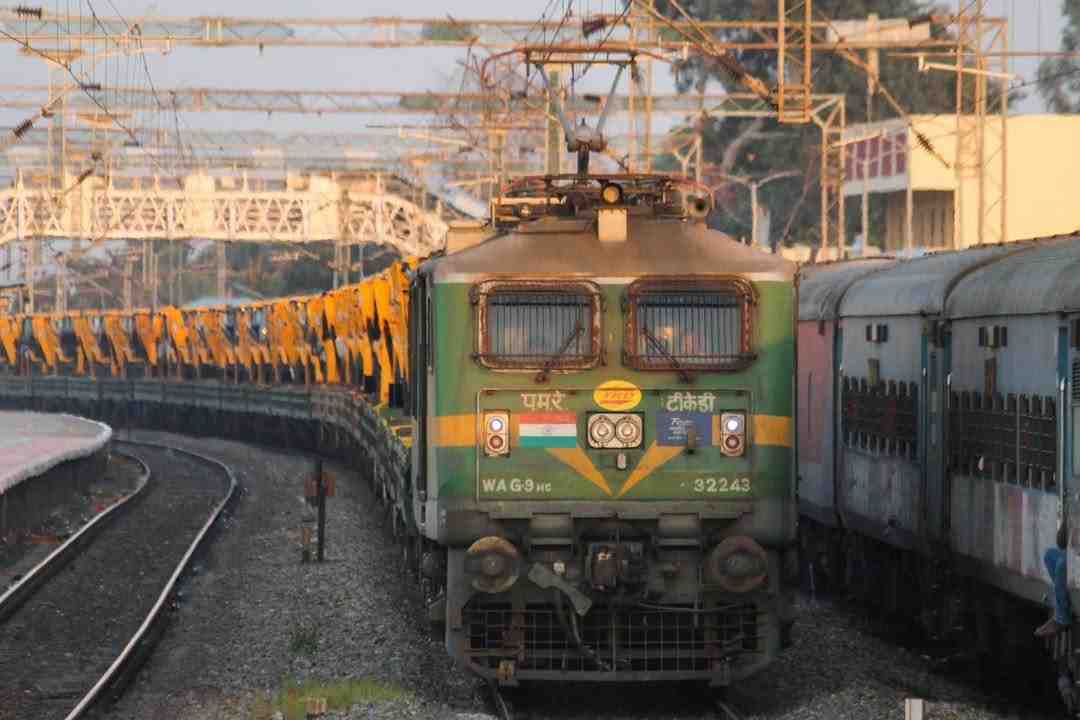
Indian Railways has registered a steady growth in freight operations during February 2026 as demand for rail-based logistics remained strong across core industrial sectors.
According to the latest operational data, Indian Railways transported 137.72 million tonnes of freight in February 2026, marking a 3.96% increase compared with 132.48 million tonnes in February 2025. Freight earnings during the month also rose to ₹14,571.99 crore, up 2.97% from ₹14,151.96 crore recorded in the corresponding month last year.
Rail transport output, measured in Net Tonne Kilometres (NTKM), a key indicator of freight movement, also recorded healthy growth. NTKM reached 76,007 million in February 2026, compared with 72,955 million NTKM in the same period last year, reflecting a 4.18% increase.
Core Commodities Continue To Drive Freight Demand
A significant portion of freight traffic during the month was driven by core sector commodities including coal, iron ore, steel, fertilizers, cement, mineral oil and container cargo.
Daily freight loading data indicated strong year-on-year growth across several key commodities. Iron ore loading rose sharply to 0.675 million tonnes, compared with 0.529 million tonnes last year, an increase of 27.6%. Pig iron and finished steel loading reached 0.343 million tonnes, up 20.8% from 0.284 million tonnes a year ago.
Other commodities also recorded robust growth. Raw materials for steel plants (excluding iron ore) increased by 46.9% to 0.141 million tonnes, while fertilizer loading rose 10.2% to 0.184 million tonnes. Mineral oil loading grew 17.8% to 0.172 million tonnes, and container EXIM traffic also increased 17.8%, reaching 0.251 million tonnes.
Strong Monthly Gains Across Key Segments
Monthly cumulative performance for February showed notable growth across several commodities. Fertilizer loading climbed to 5.396 million tonnes, compared with 4.224 million tonnes last year, registering a 27.7% increase. Clinker, an important raw material for cement production, grew 20.1% to 6.508 million tonnes.
Meanwhile, pig iron and finished steel loading rose to 6.237 million tonnes from 5.522 million tonnes, marking 12.9% growth, while iron ore movement increased 9.7% to 16.370 million tonnes.
Container traffic also maintained steady momentum. Container EXIM traffic reached 5.432 million tonnes, up 5.6%, while domestic container traffic increased 2.3% to 2.015 million tonnes, highlighting sustained logistics demand across manufacturing and trade sectors.
Positive Cumulative Performance In FY2025–26
Indian Railways also reported positive cumulative freight performance during the current financial year.
Between 1 April 2025 and 28 February 2026, the national transporter moved 1,503.80 million tonnes of freight, compared with 1,456.07 million tonnes during the same period last year, reflecting a 3.28% increase.
Freight revenue during this period stood at ₹1,60,987 crore, up from ₹1,58,539.86 crore in the corresponding period of the previous year, representing 1.54% growth.
Total freight movement measured in NTKM during the period reached 840,000 million, compared with 826,586 million NTKM last year, indicating 1.62% growth.
Strengthening India’s Logistics Backbone
Rail freight continues to be one of the most economical and environmentally efficient modes of transporting bulk commodities, enabling industries to move raw materials and finished goods over long distances in a reliable and cost-effective manner.
Indian Railways has been strengthening its freight ecosystem through capacity augmentation, improved terminal infrastructure, dedicated freight corridors and digital freight management systems. These initiatives are aimed at improving logistics efficiency while reducing transportation costs for industries.