


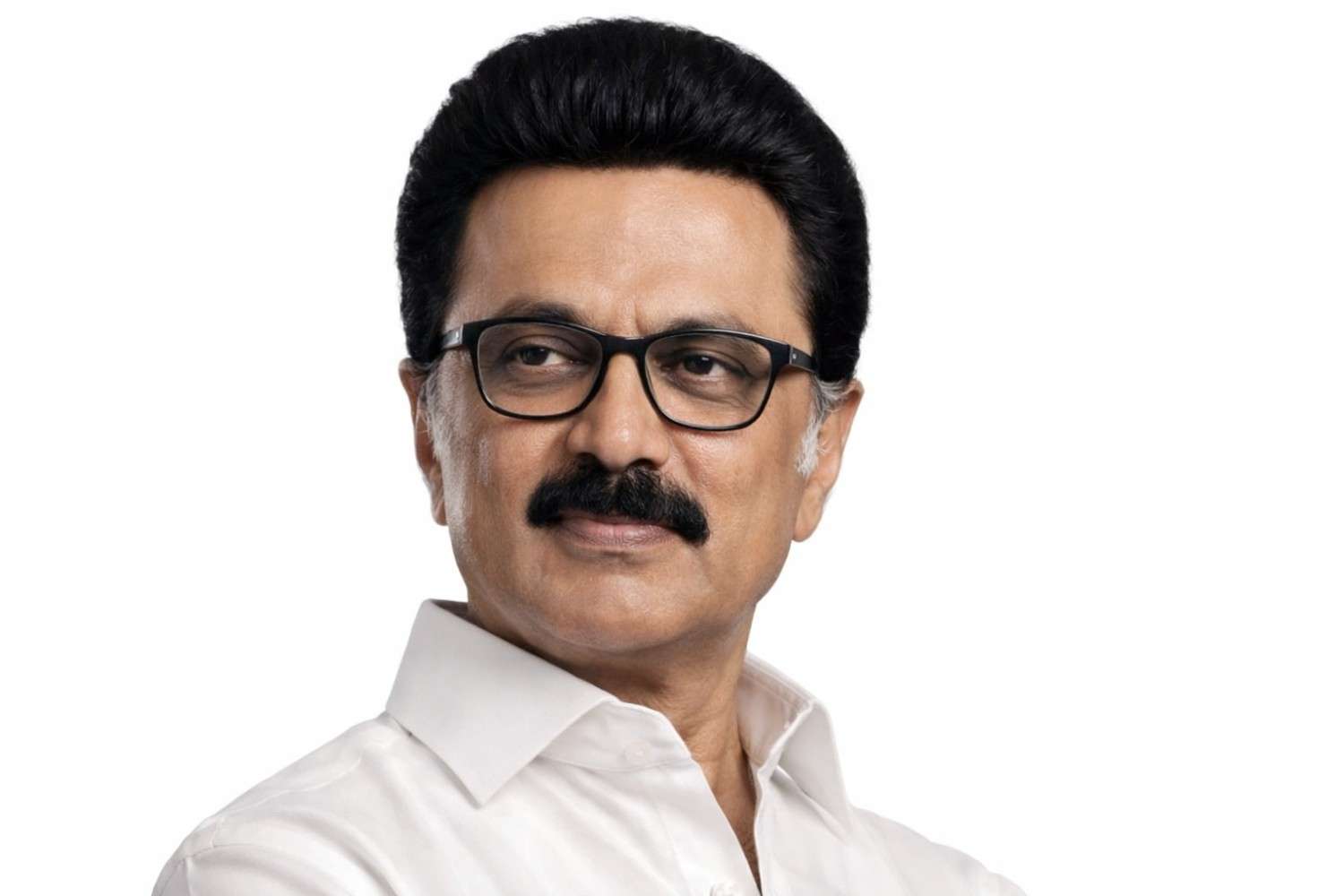
In a move that blends governance strategy with political intent, Tamil Nadu Chief Minister M. K. Stalin has unveiled an ambitious 14-point development vision titled ‘Tamil Nadu 2030 – Kanavugal Meipadum’, outlining a comprehensive roadmap for economic expansion, social welfare and technological transformation over the next five years.
The vision statement, prepared after collecting feedback from 1.81 crore families under the state government’s ‘Unga Kanava Sollunga’ (Share Your Dreams) outreach programme, appears designed not only as a policy framework but also as a potential blueprint for the ruling party’s electoral promises ahead of the next Assembly election.
At the heart of the roadmap are aggressive economic targets: attracting ₹18 lakh crore in investments, creating 50 lakh jobs, and boosting exports to $120 billion. Political observers say the scale of these goals signals an attempt by the government to position Tamil Nadu as India’s most competitive industrial and technology hub while preserving the social welfare orientation associated with the Dravidian political tradition.
A Vision Framed Around Dravidian Model 2.0
Launching the vision in Chennai, Stalin described the document as the next evolution of governance under the Dravidian Model, a framework that emphasises social justice, welfare programmes and state-led development. “This is not merely my dream. This is the dream of the people,” Stalin said, adding that district-wise development plans will be drawn up to implement the vision.
He also framed the roadmap in a broader political context, calling it “the trailer for the Dravidian Model 2.0 government.” The reference indicates that the vision could become the core policy narrative for the ruling party in the upcoming elections, projecting continuity while promising accelerated growth.
Economic Ambition: Investment And Industrial Expansion
One of the most striking aspects of the roadmap is its investment target of ₹18 lakh crore, which would require a substantial expansion of industrial activity and private capital inflows into the state. To achieve this, the government plans to strengthen the ‘Make in Tamil Nadu’ initiative by setting up industrial parks and specialised clusters across districts.
The approach reflects a broader strategy already visible in the state’s economic planning—creating sector-specific ecosystems for electronics, automobiles, renewable energy, IT and advanced manufacturing. Analysts say decentralised industrial clusters could also help spread economic growth beyond major urban centres such as Chennai, Coimbatore and Hosur, reducing regional disparities. The target of $120 billion in exports also indicates the government’s intention to further integrate Tamil Nadu with global supply chains.
Housing And Social Welfare Expansion
The roadmap reinforces Tamil Nadu’s longstanding focus on welfare-driven development. Under the Kalaignar Dream Housing Scheme, the government plans to build 5 lakh houses in rural areas and 2 lakh houses in urban areas.
The programme aims to ensure permanent housing for all families by 2030, strengthening social infrastructure while stimulating construction and allied industries. Housing schemes of this scale also carry significant economic multiplier effects, creating employment in construction, cement, steel and logistics sectors.
Healthcare: Preventive And Inclusive
The vision also seeks to expand Tamil Nadu’s healthcare ecosystem, which is already among the strongest public health systems in India. Key proposals include expanding health insurance coverage, conducting early detection camps for major diseases, reducing infant and maternal mortality rates and establishing mental health counselling centres in every district. The emphasis on preventive healthcare and mental health services reflects changing healthcare priorities as the state’s population becomes more urbanised and economically mobile.
Agriculture: Modernisation And Sustainability
Agriculture remains another pillar of the vision, despite the state’s strong industrial base. The government plans to expand net cultivated area to 50 lakh hectares, provide soil health cards to 43 lakh farmers, promote natural and organic farming, expand micro-irrigation infrastructure and restore water resources and irrigation systems.
These initiatives aim to improve farm productivity while addressing environmental sustainability, particularly in the face of climate change and water scarcity. The government also plans to diversify rural income sources through fisheries, seaweed cultivation, livestock expansion and increased milk production.
Rural Transformation: Gandhi Model Villages
The vision also focuses on rural development through the Gandhi Model Villages scheme, inspired by the rural development ideas of A. P. J. Abdul Kalam. The initiative aims to transform villages into local economic growth centres by strengthening infrastructure and employment opportunities. The programme will initially be implemented in 10 village panchayats, with plans for wider expansion.