


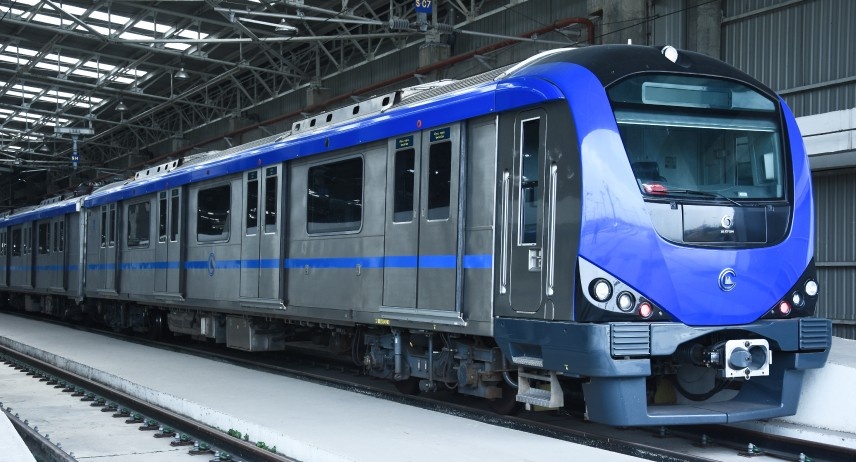
India’s metro rail network has undergone a remarkable transformation over the past decade, emerging as one of the largest and fastest-growing urban transit systems in the world. What began as a limited network serving a few cities has expanded into a nationwide mobility backbone spanning more than 1,000 kilometres across 26 cities, redefining how millions of Indians commute every day.
The rapid expansion has reshaped urban mobility by providing faster, cleaner and more reliable transport, while easing congestion on city roads and reducing dependence on private vehicles. Today, metro rail has become a symbol of modern infrastructure and sustainable urban development in India.
Rapid Expansion of Metro Infrastructure
India’s metro journey reflects both scale and technological progress. According to official data, the operational metro and regional rapid transit system (RRTS) network has grown from 248 km in 2014 to about 1,095 km in 2025, marking more than a fourfold expansion in just over a decade.
Metro services now operate in major cities including Delhi, Mumbai, Bengaluru, Kolkata, Hyderabad, Chennai, Lucknow, Pune and Ahmedabad, among several others.
This growth has elevated India to the third-largest operational metro network globally, reflecting the country’s strong policy focus on modern urban transport infrastructure.
Since 2014, the government has sanctioned 38 metro rail projects covering 1,051 km with an estimated investment of ₹3.44 lakh crore, expanding metro connectivity from five cities in 2014 to 26 cities by 2025.
Technology And Innovation Driving Urban Transport
India’s metro expansion has also been marked by the adoption of advanced technologies that enhance efficiency, safety and sustainability. Modern metro systems in the country feature world-class signalling systems, smart ticketing platforms, driverless train operations and energy-efficient designs.
Among the landmark innovations is the launch of the semi-high-speed Namo Bharat regional train, which was operationalised in October 2023. Running on the Delhi–Meerut RRTS corridor, the train operates at a speed of 160 km/h with a design speed of 180 km/h, marking a new era in fast regional connectivity.
The project has been implemented by National Capital Region Transport Corporation and is widely regarded as a major milestone in India’s push for next-generation public transport systems.
Infrastructure Push Strengthens Urban Development
A recent study titled “Golden Decade of Infrastructure Development in India with Special Reference to Metro Rail Network”, prepared by the Economic Advisory Council to the Prime Minister in January 2026, highlights how large-scale infrastructure investments are transforming India’s cities.
The report notes that metro expansion under the PM GatiShakti national infrastructure plan is strengthening urban mobility while also delivering wider economic and social benefits.