


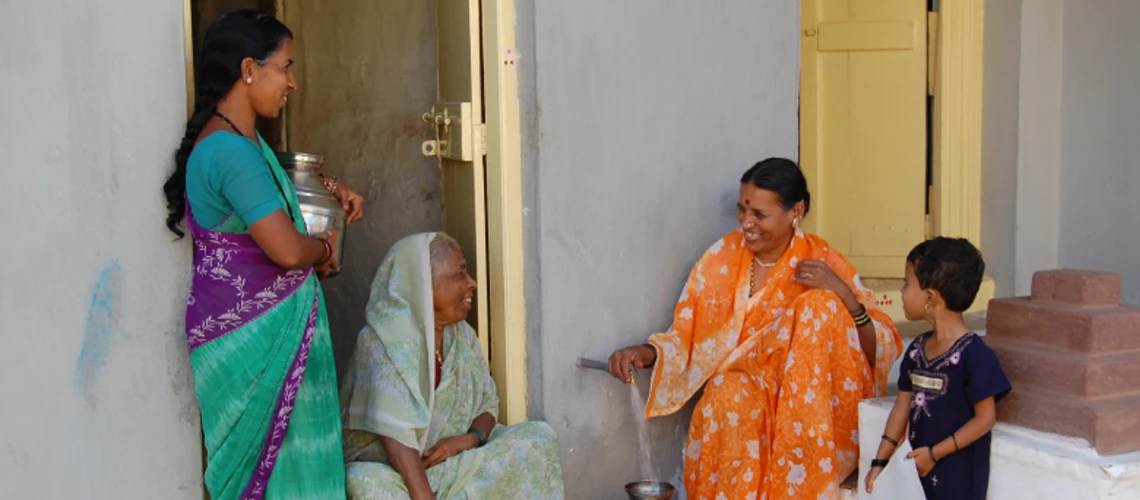
In recent years, Indian government’s programmes and city-level reforms on water supply and sanitation have driven remarkable improvements, expanding networks, upgrading treatment capacity, and demonstrating that high-quality, customer-oriented services are achievable.
Several cities now provide continuous water supply, have dramatically reduced losses, or have achieved impressive levels of wastewater reuse and solid-waste processing, according to a new joint World Bank Group–Asian Development Bank report.
Yet as urban populations grow and cities scale up these gains, a key challenge persists: unequal and often unreliable service delivery. While infrastructure coverage has expanded, service quality varies widely. For example, many households receive water for only a few hours a day. The next stage of India’s urban transformation requires ensuring that what is built consistently delivers for people.
What Does Transformation Look Like?
The experience from successful cities demonstrates that with professionalised institutions and an enabling environment, customer-focused services are both achievable and transformative. The report urges cities to shift their mindset from building more to delivering better, making sure every investment leads to real improvements in people’s lives.
A key part of this transformation is financial sustainability. Revenues in many cities remain too low to cover basic operating costs, which limits the ability of service providers to maintain systems or invest in upgrades. The result is a cycle of “build, neglect, rebuild,” with public budgets bearing the costs while the quality of service stays the same.
The report highlights that optimising revenue to meet the actual cost of providing good quality services, paired with targeted support for low-income households,can help break this cycle, encourage better performance and efficiency, and enable utilities to access a wider range of financing sources.
Another pillar is the role of the private sector. Bankable projects, those with clear revenue streams, transparent accounting, and strong performance incentives, can open the door to new partnerships that attract investment to scale up what works, innovate, and reach more people. With supportive policies, sound regulation, and tools like performance-based contracts and credit enhancements, private participation can help cities shift from infrastructure to service excellence.
The result is not only better services but also new jobs in areas such as utility operations, renewable energy, biogas, wastewater reuse, and sustainable supply chains.
A Roadmap For The Future
So, how can cities get there? The report lays out four practical shifts:
Invest in what matters. Prioritise projects that achieve measurable service improvements, like reducing leaks, expanding coverage, or improving waste processing.
Reward results. Use financing tools and incentives that encourage cities and partners to deliver better service, not just more infrastructure.
Raise the bar. Tie government grants to clear commitments and strong monitoring, so public money drives real change.
Build professional institutions. Invest in people, training, and systems so that cities have the capacity and discipline to deliver, year after year.
Crucially, the report emphasises that India already has the building blocks: national missions, performance-linked funding programmes, and extensive city-level experience. The challenge, and opportunity, is to connect these pieces into systems that consistently deliver outcomes across cities of all sizes.