


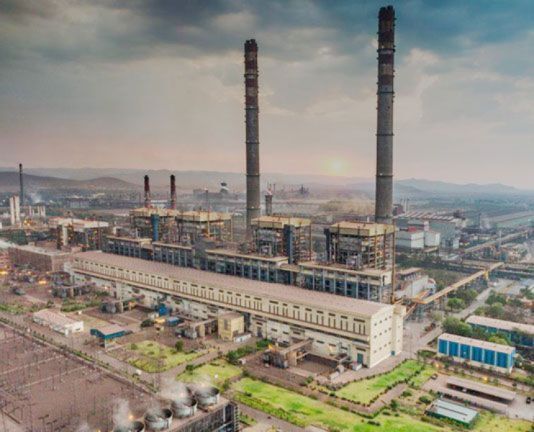
JSW Energy Ltd, part of the $23 billion JSW Group, has completed the acquisition of Raigarh Champa Rail Infrastructure Pvt Ltd (RCRIPL) for ₹700 crore through the corporate insolvency resolution process.
The acquisition is aimed at strengthening logistics and operational efficiency for its power generation assets in Chhattisgarh.
Securing critical infrastructure
RCRIPL provides railway infrastructure services to JSW Mahanadi Power Company Ltd (JMPCL), which operates a 3,600 MW (6×600 MW) thermal power plant in the State.
Currently, 1,800 MW of capacity is operational, while the remaining capacity is under construction.
Enhancing operational efficiency
The acquisition will enable JSW Energy to gain operational control over railway infrastructure services supporting the plant, ensuring reliability and reducing dependency risks for a key input.
The move is expected to improve efficiency in coal logistics and support seamless operations for the entire 3,600 MW capacity once fully commissioned.
Resolution plan details
Under the approved resolution plan, the ₹700 crore consideration has been structured through a combination of cash payment and issuance of non-convertible debentures by RCRIPL to financial creditors.
With this acquisition, along with the earlier acquisition of KSK Water Infrastructures Pvt Ltd, the company has secured key infrastructure resources for its Mahanadi power project.
Capacity expansion roadmap
JSW Energy has a total locked-in generation capacity of 32.1 GW, including 13.3 GW operational and 14.2 GW under construction across thermal and renewable segments, along with a pipeline of 4.6 GW.
In the thermal segment, the company has 5.7 GW operational capacity, 3.2 GW under construction and a pipeline of 1.8 GW, taking its total locked-in thermal capacity to 10.7 GW.
Long-term targets
The company also has 29.6 GWh of locked-in energy storage capacity, comprising hydro pumped storage projects and battery energy storage systems.
JSW Energy aims to achieve 30 GW of generation capacity and 40 GWh of energy storage by 2030, while targeting carbon neutrality by 2050.