


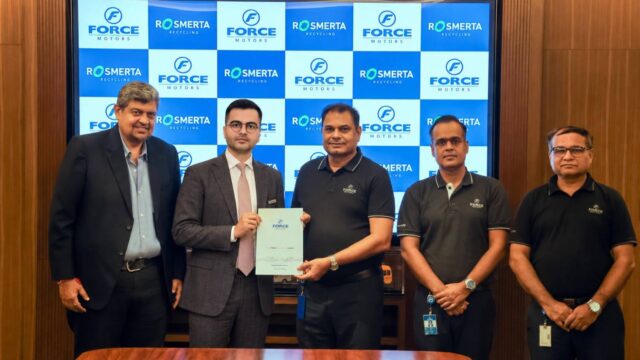
Force Motors has partnered with Rosmerta Auto Recycling to facilitate the authorised scrapping of end-of-life vehicles (ELVs), providing customers with access to a registered vehicle scrapping facility (RVSF) for retiring ageing vehicles.
The partnership will enable eligible Force Motors customers to route their vehicles through Rosmerta’s facility for documentation, depollution, dismantling and recovery of recyclable materials. The initiative aims to promote organised vehicle scrapping and reduce dependence on informal disposal channels.
The arrangement is particularly relevant for commercial vehicle operators, for whom fleet replacement, vehicle maintenance and the timely retirement of ageing vehicles are important operational considerations.
Through the partnership, customers will have access to an established process for retiring vehicles that have reached the end of their useful life, while ensuring that recoverable materials are channelled back into the recycling chain.
Scrapping process and documentation
Rosmerta’s registered vehicle scrapping facility will support eligible vehicle owners with documentation and the applicable scrapping procedures. The process includes depollution and dismantling, followed by the segregation and recovery of materials such as steel and aluminium for recycling.
Customers will also receive assistance with the Certificate of Deposit (CoD), wherever applicable, along with documentation at different stages of the scrapping process.
The facility will support compliance with applicable vehicle scrapping and recycling requirements. Extended Producer Responsibility (EPR) credits may also be generated and transferred wherever applicable.
The companies aim to improve awareness among Force Motors customers about authorised scrapping facilities and the environmental and resource-recovery benefits of organised vehicle recycling.
Focus on responsible vehicle disposal
Force Motors said the partnership complements its broader sustainability efforts, including resource efficiency, waste reduction and responsible recycling.
“ A vehicle goes through several stages during its operating life, and responsible disposal is an important part of that journey. Through our association with Rosmerta Recycling, we aim to provide our customers with an authorised and dependable option when their vehicles reach the end of their useful life. This also complements our broader sustainability efforts, which include improving resource efficiency, reducing waste and promoting responsible recycling across our operations. We hope this partnership will encourage greater awareness and adoption of organised vehicle scrappage and recycling,” said Force Motors Managing Director Prasan Firodia.
Rosmerta Group President,Kartick V Nagpal said making registered scrapping infrastructure accessible to vehicle owners was essential to expanding organised vehicle recycling.
“The success of vehicle scrappage depends not only on having the right infrastructure, but also on making that infrastructure accessible to vehicle owners. Our partnership with Force Motors gives their customers a clear route to an authorised scrapping facility. Once a vehicle reaches our facility, we can safely depollute and dismantle it and recover materials such as steel and aluminium for recycling. This helps ensure that the value in an old vehicle is not lost and can find its way back into the wider manufacturing cycle,” he said.
Supporting resource recovery
End-of-life vehicles contain materials that can be recovered and reused when dismantled systematically. Recovering steel, aluminium and other automotive materials can help reduce waste and support more efficient resource utilisation.
Rosmerta Auto Recycling Pvt Ltd operates an authorised registered vehicle scrapping facility in the National Capital Region (NCR). The company provides end-of-life vehicle recycling services through depollution, dismantling and material recovery processes.
The partnership with Force Motors is expected to make authorised scrapping more accessible to eligible customers while supporting India’s broader efforts to develop a circular economy for automotive materials.