


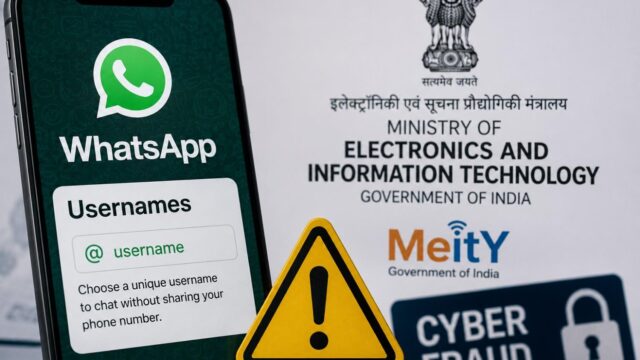
Meta-owned WhatsApp is preparing to introduce a usernames feature that will let users connect without sharing their mobile phone numbers. While the feature is aimed at enhancing privacy, India’s Ministry of Electronics and Information Technology (MeitY) believes it could also create fresh challenges for law enforcement and significantly increase cybercrime.
The government has now directed WhatsApp not to roll out the feature in India until consultations are completed and has asked the company to explain why regulatory action should not be initiated.
Here’s a look at the key concerns behind the government’s decision.
What is WhatsApp’s usernames feature?
The new feature will allow WhatsApp users to create a unique username, much like platforms such as Telegram, Instagram or X.
Instead of exchanging phone numbers, users will be able to initiate conversations using usernames. Once the feature is enabled, a user’s mobile number will no longer be visible to first-time contacts. WhatsApp also plans to offer an optional “username key” for additional privacy controls.
For users, the feature promises greater privacy by reducing the need to share personal phone numbers.
Why is the Indian government concerned?
While the feature improves privacy, MeitY believes it could also make it easier for cybercriminals to hide their identities.
According to the ministry, fraudsters could create fake usernames, contact victims without revealing their phone numbers and carry out scams with greater anonymity.
India has witnessed a sharp rise in cyber frauds over the past few years, particularly: Digital arrest scams, Phishing attacks, Investment frauds, Job scams, Online financial fraud and Customer care impersonation scams. The government fears the usernames feature could make these crimes easier to execute.
Identity spoofing is another major worry
One of MeitY’s biggest concerns is impersonation. Scammers may register usernames that closely resemble those of: government departments, banks and financial institutions, police agencies, well-known companies and public personalities.
For example, a fraudster could create a username that looks almost identical to an official account by replacing letters with similar-looking characters or adding minor variations that are difficult to notice. Officials believe this could increase identity spoofing and erode public trust.
Why does hiding phone numbers matter?
Currently, a phone number provides an additional identifier that users can verify before responding to unknown contacts. If conversations begin solely through usernames, victims may find it harder to distinguish genuine accounts from fake ones.
The government argues that this could reduce an important layer of transparency that currently exists on WhatsApp.
What laws has the government cited?
In its notice to WhatsApp, MeitY referred to several provisions of Indian law, including: Section 79 of the Information Technology Act, 2000: This grants intermediaries protection from liability only if they comply with due diligence requirements.
Rules 3 and 4 of the IT Rules, 2021: These require significant social media intermediaries to prevent misuse of their platforms and comply with additional due diligence obligations.
Sections 66C and 66D of the IT Act: These deal with identity theft and cheating by personation using computer resources. The government says WhatsApp, being a significant social media intermediary, has enhanced responsibilities under these provisions.
Could WhatsApp face regulatory action?
Possibly. The government has asked Meta to explain why action should not be initiated under the Information Technology Act and the IT Rules for launching a feature that could potentially increase cybercrime.
The notice effectively serves as a show-cause communication, requiring the company to justify its safeguards before proceeding with the rollout.
Has the rollout been stopped?
For now, yes. MeitY has directed WhatsApp not to introduce the usernames feature in India until consultations with the government are completed. The company has also been asked to submit a detailed explanation, along with supporting documents, within three days of receiving the notice.
What could happen next?
Meta is expected to engage with the government and explain how the usernames feature will prevent fraud, impersonation and misuse.
The discussions could lead to additional safeguards before the feature is allowed in India. These may include stronger username verification, stricter impersonation detection, enhanced reporting mechanisms or other measures that satisfy Indian regulators.
The bottom line
The government’s objection is not to usernames themselves, but to the possibility that the feature could inadvertently make cyber fraud, phishing and impersonation easier.
India wants assurances that the privacy benefits offered by usernames do not come at the cost of user safety and law enforcement. Until those concerns are addressed, WhatsApp’s usernames rollout in India is likely to remain on hold.