


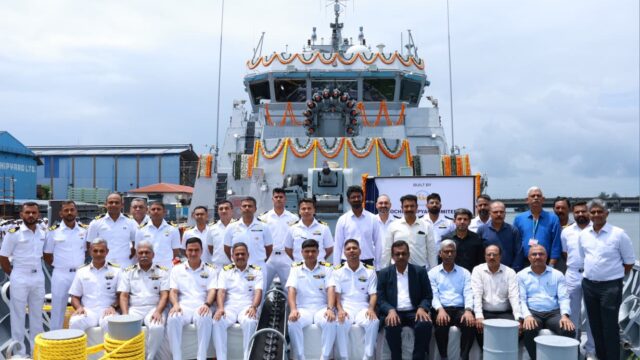
Cochin Shipyard Ltd (CSL) has delivered Mangrol, the third Anti-Submarine Warfare Shallow Water Craft (ASW-SWC) built for the Indian Navy, strengthening the country’s indigenous naval shipbuilding capabilities.
The vessel was delivered to the Indian Navy on August 21, 2026.
Built with more than 80% indigenous content, Mangrol is designed to undertake underwater surveillance and Anti-Submarine Warfare (ASW) operations in coastal waters. The vessel is also equipped to undertake Low-Intensity Maritime Operations (LIMO) and mine warfare missions.
Advanced combat capabilities
Mangrol is propelled by waterjets and incorporates advanced systems for detecting and countering underwater threats. Its weapons and sensor suite includes state-of-the-art torpedoes, anti-submarine rockets, advanced radars and sonars.
The vessel’s capabilities are aimed at enhancing the Indian Navy’s ability to monitor and secure coastal waters while responding to emerging underwater threats.
Named after Gujarat coastal town
Mangrol derives its name from the coastal town and minor port of Mangrol in Junagadh district, Gujarat, a prominent harbour associated with the marine fishing industry.
The ship also carries forward the legacy of the erstwhile INS Mangrol, an Indian Naval Minesweeper that remained in service until 2004. The naming continues the Indian Navy’s tradition of preserving the names of distinguished warships.
Boost to indigenous defence manufacturing
The delivery of Mangrol marks another milestone in the Indian Navy’s efforts to strengthen indigenous shipbuilding and defence manufacturing.
With more than 80% indigenous content, the vessel underscores the growing capabilities of India’s domestic defence industrial ecosystem and aligns with the Government’s Aatmanirbhar Bharat vision.
The induction of advanced shallow-water anti-submarine warfare platforms is expected to further strengthen the Navy’s coastal surveillance and underwater warfare capabilities, while supporting the broader push towards self-reliance in defence production.