

India’s ageing population is expected to nearly double from an estimated 166.9 million people aged 60 and above in 2026 to around 347 million by 2050, highlighting the need for an integrated senior living and care ecosystem, according to the Association of Senior Living India (ASLI).
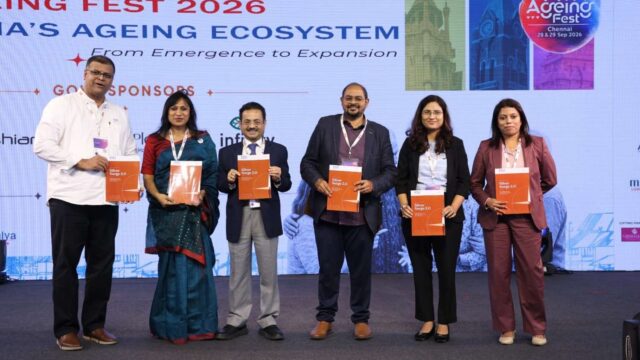
ASLI released Silver Surge 2.0 – From Places to Care: Building India’s Senior Care Continuum, its second annual report on India’s ageing ecosystem, at the 7th ASLI Ageing Fest 2026. The report was prepared with the active support of PwC India.
Senior living needs a wider care continuum
The report notes that organised senior living penetration remains at around 1.5%, despite the sector growing at an estimated 14.2% annually since 2024. Assisted living accounts for less than 10% of organised senior living stock, compared with 24–29% in mature markets.
India currently has around 2,100 organised assisted-living beds, while an estimated 8.8 million Indians live with dementia. The report also estimates that 12.2% of seniors have supportive or palliative care needs.
“India has over 166 million seniors today, yet organised senior living penetration is barely 1.5%. The opportunity is not merely about building more senior homes, but about creating an integrated ecosystem where independent living, assisted living, rehabilitation, memory care and home care are available as needs evolve,” said Association of Senior Living India (ASLI) Chairman Rajagopal G.
The report identifies six layers of care, wellness and chronic care, home care, assisted living, transition and rehabilitation care, memory care, and palliative and end-of-life care, and calls for greater connectivity between them.
Workforce and financing emerge as key gaps
Silver Surge 2.0 highlights workforce development, financing and quality standards as priorities for the sector. Around 75% of surveyed providers identified workforce training as a priority, while 67% highlighted the need for increased funding.
The report notes that long-term care, assisted living, rehabilitation and home-based services remain largely financed out of pocket. It calls for innovative financing models, insurance coverage for out-of-hospital care, structured caregiver training and common quality standards.
S.C.A.L.E. framework outlines 14 actions
The report introduces the S.C.A.L.E. framework, comprising 14 recommended actions for 2026–27 across five areas: Standards & Policy, Capital & Financing, Assisted & Continuum Care, Labour & Workforce, and Enabling Technology.
“Families are looking for more than a home for their parents. They want the assurance of independence, dignity and appropriate care when needed,” said Association of Senior Living India (ASLI) Chairman Rajagopal G.
He added that the next phase of expansion would need skilled caregivers, sustainable financing and measurable quality standards to support seniors through changing health and functional needs.