


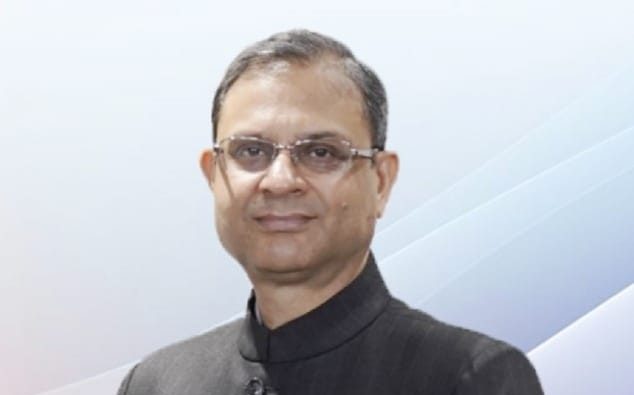
The Reserve Bank of India (RBI) on Friday left the benchmark repo rate unchanged at 5.25%, with the Monetary Policy Committee (MPC) unanimously voting to maintain the status quo as it navigates a complex mix of rising inflation risks and slowing global growth.
The six-member MPC also retained its neutral policy stance, keeping the Standing Deposit Facility (SDF) rate at 5% and the Marginal Standing Facility (MSF) rate and Bank Rate at 5.50%.
The decision reflects the central bank’s preference to wait for greater clarity on the inflation outlook despite mounting concerns over global supply chain disruptions, elevated energy prices and weather-related risks.
Balancing inflation and growth
RBI Governor Sanjay Malhotra said the global environment has worsened since the last policy review, with ongoing geopolitical tensions disrupting supply chains and pushing up energy prices.
While inflation remains below the RBI’s 4% target, the central bank expects price pressures to intensify in the coming quarters. CPI inflation is projected at 5.1% in 2026-27, with inflation expected to rise to 5.9% in the third quarter before moderating.
The RBI noted that the pass-through of global commodity shocks to domestic prices has so far been limited. However, higher crude oil prices, rising input costs and the possibility of second-round effects on wages and inflation expectations remain key concerns.
Adding to the uncertainty are forecasts of a sub-normal southwest monsoon and potential El Niño conditions, which could affect food production and rural demand.
Growth outlook trimmed by external headwinds
Despite external challenges, India’s economy has remained resilient. Real GDP growth for 2025-26 was estimated at 7.6%, supported by strong private consumption, fixed investment and robust performance of the manufacturing and services sectors.
High-frequency indicators suggest domestic economic activity has largely held up since the onset of the geopolitical conflict. Manufacturing and services PMIs remain in expansion territory, while private consumption and investment continue to show strength.
However, the RBI cautioned that rising energy costs, supply disruptions and higher logistics expenses are beginning to weigh on economic activity.
For 2026-27, the central bank has projected GDP growth at 6.6%, with quarterly growth expected at 6.6% in Q1, 6.3% in Q2, 6.5% in Q3 and 6.8% in Q4.
The RBI highlighted that prolonged supply chain disruptions, volatility in global financial markets and adverse weather conditions pose downside risks to growth.
Government support offers cushion
The central bank expects several government initiatives to help mitigate external shocks. These include support for MSMEs and exporters, efforts to increase domestic gas and crude production, promotion of locally sourced alternatives to imports and diversification of critical supply chains.
Urban consumption is also expected to remain supported by stable employment conditions, continued momentum in services and government capital expenditure.
Liquidity remains comfortable
System liquidity remained in surplus, averaging ₹2.63 lakh crore since the April MPC meeting. The RBI said its proactive liquidity measures have ensured adequate banking system liquidity.
Market rates largely remained aligned with the policy corridor, although commercial paper and certificate of deposit rates came under pressure in May. Government bond yields eased briefly following geopolitical developments before hardening again amid renewed uncertainty.
Wait-and-watch approach
The latest policy signals that the RBI is prioritising flexibility amid an uncertain macroeconomic environment. While inflation risks have intensified due to global commodity and supply-side shocks, policymakers believe immediate rate action may be premature.
By maintaining rates and retaining a neutral stance, the MPC has preserved room to respond to evolving conditions while closely monitoring inflation expectations, energy prices, monsoon developments and the trajectory of global supply chains