


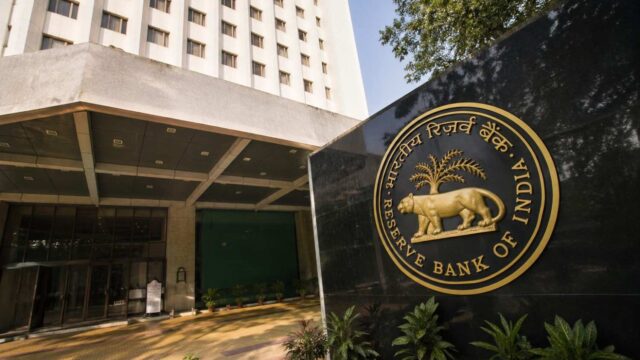
The Reserve Bank of India (RBI) has retained State Bank of India (SBI), HDFC Bank and ICICI Bank in the list of Domestic Systemically Important Banks (D-SIBs), with all three lenders continuing under the same bucketing structure as in the 2025 list.
The additional Common Equity Tier 1 (CET1) capital requirements applicable to these banks will continue unchanged and will be over and above the capital conservation buffer.
The latest assessment is based on data collected from banks as of March 31, 2026, the RBI said.
Additional capital requirements
Under the D-SIB framework, banks are classified into different buckets based on their Systemic Importance Scores (SISs). The higher the bucket, the greater the additional capital requirement, reflecting the potential impact of a bank’s failure on the domestic financial system.
The additional CET1 capital requirement is intended to strengthen the loss-absorbing capacity of systemically important lenders and reduce the risks that their financial distress could pose to the wider banking system.
The RBI requires designated D-SIBs to maintain additional common equity capital over and above the applicable regulatory capital requirements, including the capital conservation buffer.
How the D-SIB framework works
The RBI introduced the Framework for Dealing with Domestic Systemically Important Banks on July 22, 2014, and subsequently updated it on December 28, 2023.
Under the framework, the central bank has been disclosing the names of designated D-SIBs annually since 2015 and assigning them to appropriate buckets based on their systemic importance scores.
SBI and ICICI Bank were first designated as D-SIBs in 2015 and 2016, respectively. HDFC Bank joined the list in 2017, when all three lenders were classified as systemically important banks.
Their continued inclusion reflects their significance to India’s financial system, given their size, interconnectedness and importance to the functioning of the banking sector.
Additional norms for foreign banks
The D-SIB framework also provides for additional capital requirements for foreign banks operating in India that are classified as Global Systemically Important Banks (G-SIBs).
Such banks are required to maintain an additional CET1 capital surcharge in India, proportionate to their risk-weighted assets (RWAs) in the country.
The applicable surcharge is calculated by multiplying the additional CET1 buffer prescribed by the home regulator by the ratio of the bank’s India RWAs, as reported in its consolidated global group books, to its total consolidated global group RWAs.
The framework is aimed at ensuring that banks whose failure could have wider financial stability implications maintain adequate capital buffers to absorb potential losses.