


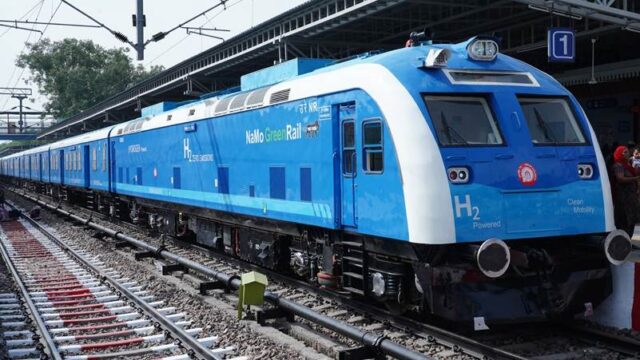
India’s first hydrogen-powered train has travelled more than 1,200 km between Jind and Sonipat, saving over 3,200 litres of diesel during trial operations.
The successful run marks a major milestone in Indian Railways’ efforts to develop indigenous zero-emission rail technology and reduce dependence on fossil fuels.
Zero-emission technology
The hydrogen train generates electricity onboard through a chemical reaction between hydrogen and oxygen.
The process powers the train while emitting only water vapour, eliminating smoke and tailpipe carbon emissions, making it one of the cleanest forms of rail propulsion.
Indigenous development
The project has been developed indigenously by Indian Railways.
The 10-coach train is powered by two hydrogen driving power cars delivering a combined output of 2,400 kW. It is supported by lithium iron phosphate batteries and hydrogen fuel cylinders.
Hydrogen infrastructure
The project includes Indian Railways’ first dedicated hydrogen storage facility at Jind.
Green hydrogen is stored at pressures of up to 500 bar and dispensed at 350 bar, with a total storage capacity of around 3,000 kg.
Safety features
The train is equipped with multiple independent safety systems to detect hydrogen leaks, heat, flames and smoke.
These are backed by automatic shut-off systems, continuous ventilation, compliance with international safety standards and mandatory validation procedures.
Next phase
Following the successful operations between Jind and Sonipat, Indian Railways will soon begin trials of the hydrogen train on the Delhi route.
The project establishes an indigenous hydrogen rail ecosystem and demonstrates India’s capability to develop sustainable, zero-emission railway technology, paving the way for wider deployment of hydrogen-powered trains.