


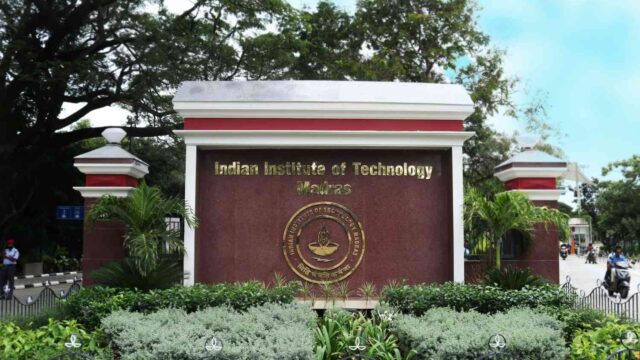
The Indian Institute of Technology Madras (IIT Madras) will host the sixth edition of the International Symposium on Microbiomes from February 11 to 13, 2027, bringing together researchers from India and abroad to explore microbial communities and their applications in healthcare, agriculture, environmental protection and space exploration.
Organised by the institute’s Centre for Integrative Biology and Systems mEdicine (IBSE), the three-day event will focus on the theme ‘Microbiomes in Environment, Health, and Beyond’. The deadline for early-bird registration is October 31, 2026.
Microbiomes are communities of microorganisms that inhabit environments ranging from the human gut and skin to soil, oceans and industrial settings. Understanding their interactions can support the development of solutions for human health, agricultural productivity, waste treatment and the breakdown of environmental pollutants, including plastics.
The symposium will examine how microbiome research, supported by computational modelling, bioinformatics and experimental approaches, can translate scientific discoveries into practical applications.
Research spans healthcare to space exploration
The programme will cover microbial ecology and evolution, human and environmental microbiomes, multiomics, mathematical modelling, phage-host interactions and antimicrobial resistance. Sessions will also explore microbial life in extreme environments and its potential applications in biotechnology, astrobiology and planetary protection.
More than 20 researchers from India and abroad are expected to participate. Speakers include Rob Knight of the University of California San Diego, a leading microbiome researcher associated with the Earth Microbiome Project and the American Gut Project; Daniel Segrè of Boston University; and Janet Jansson of Pacific Northwest National Laboratory.
The symposium is being organised by Prof. Karthik Raman, Coordinator of IBSE and Professor in the Department of Data Science and AI at IIT Madras, along with Dr. Kasthuri Venkateswaran, Adjunct Faculty at the institute.
Dr. Venkateswaran previously spent more than two decades at NASA’s Jet Propulsion Laboratory studying microorganisms in spacecraft assembly cleanrooms and aboard the International Space Station. His work contributed to research supporting NASA’s planetary protection efforts.
“Microbiomes shape the health of people and of the planet, and understanding them increasingly depends on bringing data, models and experiments together,” said Prof. Karthik Raman, Coordinator of IBSE and Professor in the Department of Data Science and AI at IIT Madras.
Dr. Kasthuri Venkateswaran, Adjunct Faculty at IIT Madras, highlighted the potential of extremophiles, microorganisms capable of surviving in harsh environments, in biotechnology, human health and space exploration.
Building India’s microbiome research ecosystem
Established in 2015, IBSE brings together researchers working on integrative and systems-based approaches to biology and medicine. The centre organised its first international symposium in 2018 and has subsequently expanded its focus to microbiome research.
The upcoming edition will include poster presentations, flash talks and panel discussions, providing opportunities for early-career researchers to present their findings and interact with established scientists.
The organisers aim to strengthen collaboration among microbiome researchers in India while encouraging interdisciplinary research connecting biology, data science, medicine and environmental studies.