


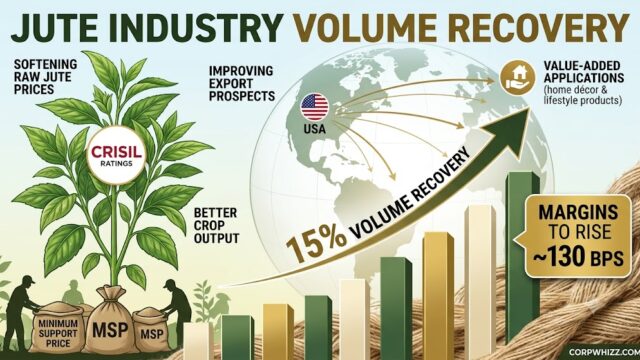
India’s jute industry is expected to stage a recovery this fiscal, with sales volumes projected to grow about 15% after declining at an annualised rate of around 10% over the previous two fiscals, according to Crisil Ratings.
The recovery is expected to be driven by a revival in domestic demand, improving export prospects and softer raw jute prices. The resulting improvement in profitability is also expected to strengthen the credit profiles of jute manufacturers.
Domestic demand to drive recovery
The domestic market, which accounts for nearly 85% of industry revenue, is expected to grow about 20% this fiscal, reversing a similar cumulative decline over the preceding two years.
The earlier downturn followed a sharp increase in raw jute prices, which manufacturers passed on to customers. This weakened demand and encouraged a shift towards lower-cost alternative packaging materials.
With raw jute prices now moderating, lower product prices are expected to support a recovery in domestic demand.
Margins seen improving 130 bps
Profitability is expected to improve more sharply than sales, with operating margins projected to expand by around 130 basis points to nearly 9% this fiscal.
“While improving demand will support revenue growth, profitability is likely to receive an even larger boost from easing raw material costs. Better crop output has improved domestic availability of raw jute and led to softer prices despite subdued imports,” said Crisil Ratings Senior Director, Rahul Guha.
Raw jute accounts for 60-65% of the industry’s operating expenses. Raw jute prices had increased by more than 10% last fiscal amid supply constraints. However, higher minimum support prices encouraged farmers to increase cultivation, resulting in better crop output this year.
Exports offer additional support
Export demand is also showing signs of improvement, with growth in home textiles, lifestyle products and other value-added applications expected to support overseas sales.
The rationalisation of US tariffs from the elevated levels seen last fiscal could also improve the competitiveness of Indian jute products in global markets.
Balance sheets remain resilient
The expected improvement in profitability, coupled with limited debt-funded capital expenditure, is likely to strengthen industry credit metrics.
Gearing is projected to improve marginally to about 0.5 time this fiscal from 0.6 time last year, while interest coverage is expected to strengthen to nearly 5 times from about 4 times.
“Beyond the cyclical recovery, the industry stands to benefit from structural shifts towards sustainable materials. Growing environmental awareness, tighter rules on single-use plastics and rising preference for biodegradable alternatives are creating new opportunities for jute-based products,” said Crisil Ratings Director, Argha Chanda.
Value-added applications such as geotextiles, agro-textiles, home décor and industrial packaging currently account for about 12% of industry revenue. However, their higher realisations could make them an important long-term growth driver.
The recovery nevertheless remains sensitive to the sustainability of demand, particularly in export markets, as well as raw jute prices, crop conditions and changes in government policy support