

India’s plastic story is changing, from reducing single-use bags to recovering discarded packaging and converting waste into products such as furniture, pipes and chipboards.
The shift has been supported by stricter rules and stronger waste-management systems. The Swachh Bharat Mission, launched on October 2, 2014, strengthened collection, segregation and recovery, while identified single-use plastic items were prohibited from July 1, 2022.
But the transition is also being driven by everyday habits and community-led initiatives that span the plastic journey, reduce, reuse, return, recover and recreate.
Markets drive change
In Tiruchirappalli, the city corporation launched a campaign in 2022 to curb single-use plastic in markets. Three farmers’ markets, Tennur, K.K. Nagar and Woraiyur , covering 220 vendors, were targeted through awareness and engagement.
The “Thunippai Thiruvizhai” (Cloth-Bag Festival) encouraged shoppers to switch to reusable bags. Tennur market avoided 2,200 kg of single-use plastic in one year, while K.K. Nagar avoided 620 kg in four months and Woraiyur 300 kg in six months.
In Vita, Maharashtra, five “Thaila ATMs” installed at crowded locations provide reusable cotton bags through vending-machine-like systems. The machines use GSM technology to monitor stocks remotely. Women from local Self-Help Groups stitch the bags.
Around 6,000 bags have been sold, with the weekly market recording nearly 200 bags a day.
Giving plastic a value
Maharashtra is combining enforcement with awareness campaigns, market inspections and public initiatives. In Indapur, authorities seized 25 kg of plastic bags and imposed a ₹90,000 fine, while a Self-Help Group in Wardha distributed 17,000 paper bags.
In the Andaman and Nicobar Islands, a buy-back programme encourages consumers to return used milk pouches in exchange for rewards such as fresh milk and discounts.
The initiative, undertaken with Andaman and Nicobar Islands Integrated Development Corporation and Sri Vijaya Puram Municipal Council, collected 17,600 milk pouches by November 2024. Residents received 352 litres of milk as rewards.
From waste to new products
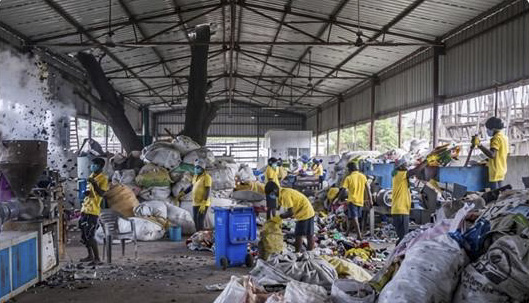
Bengaluru is taking the recovery route through Project Prithvi, under which a Material Recovery Facility or Swachhata Kendra was established in 2019 for Safai Saathis.
Managed by Hasiru Dala, the facility sorts, shreds and bales plastic waste for recyclers. It also provided employment to 76 Safai Saathis during the COVID-19 pandemic.
Processed plastic is used in roads, agricultural water pipes and furniture, giving discarded material another economic use.
Patiala has focused on one of the harder waste streams, multilayered plastics (MLPs) used in products ranging from chocolate and biscuit packets to shampoo sachets.
At a CSR-supported Plastic Recycling Facility, low-value plastic is sorted, cleaned and shredded into flakes. Hot and cold pressing converts the material into chipboard, an alternative to plywood that can be used for furniture, roofing and temporary shelters.
With a capacity of 10 tonnes a day, the facility produces 75 to 100 chipboards.
Together, these initiatives show how India’s plastic challenge is increasingly being addressed beyond collection and disposal. By creating incentives for reuse, strengthening recovery and finding commercial uses for difficult-to-recycle waste, communities are pushing plastic closer to a circular economy.