


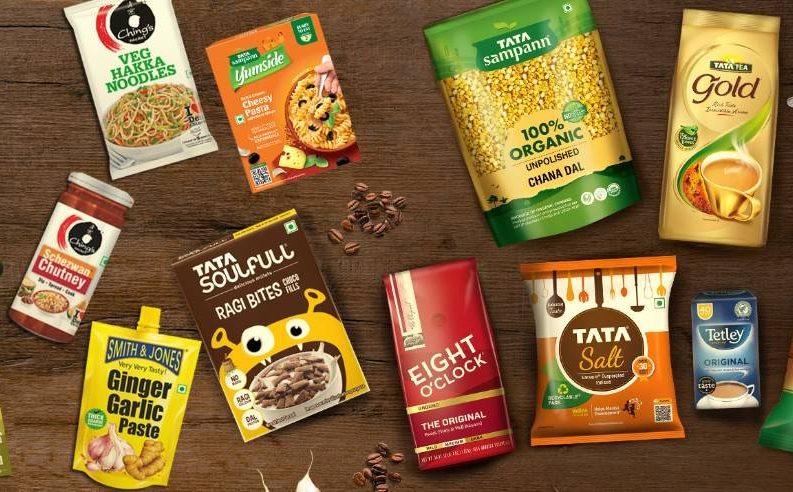
Tata Consumer Products is stepping up its focus on quick commerce and e-commerce channels as shifting consumer behaviour reshapes India’s retail landscape, with Managing Director and Chief Executive Officer Sunil D’Souza asserting that the company’s strategy is to “be where the consumer is”.
Speaking during the company’s earnings call, D’Souza said the company would continue prioritising emerging retail channels even as it strengthens traditional distribution. According to him, Tata Consumer’s direct outlet reach has expanded from 0.5 million outlets six years ago to nearly 2 million outlets now, while its numeric reach has grown from 2 million to 4.5 million outlets.
He said the rapid rise of quick commerce and e-commerce has helped the company directly connect with consumers, leveraging the strength of Tata’s trusted brand equity and product quality.
Distribution expansion remains a key priority
D’Souza noted that despite the sharp expansion in reach, the company still sees significant headroom in distribution growth across general trade channels.
He emphasised that Tata Consumer performs strongly whenever it engages directly with consumers through digital and quick-commerce platforms, adding that closing distribution gaps and improving execution could further strengthen its market position even in traditional trade.
The company’s aggressive omni-channel strategy comes at a time when consumer goods firms are increasingly recalibrating sales models to align with fast-growing digital retail ecosystems.
Premium nutrition and wellness categories in focus
Tata Consumer also sees significant opportunities emerging in the food and beverage segment, particularly in nutrition, health, wellness and premium offerings.
D’Souza said the company continues to identify “white spaces” across these categories and hinted at a steady pipeline of product launches going forward.
The company has already been expanding its portfolio across functional beverages, premium teas, health-focused products and ready-to-drink formats as consumer preferences evolve towards wellness-oriented consumption.
West Asia tensions yet to significantly impact margins
Commenting on the ongoing geopolitical tensions in West Asia, D’Souza said the company has witnessed some increase in packaging and LPG-linked costs, but does not currently foresee major pressure on margins.
He said Tata Consumer’s diversified portfolio, spanning commodities as well as highly processed food products, has helped cushion the impact.
While broader fuel inflation could alter the scenario if crude prices rise sharply, the company remains confident of maintaining profitability through calibrated pricing actions where necessary.
D’Souza said Tata Consumer expects EBITDA growth to stay ahead of top-line growth while maintaining double-digit revenue expansion.
Coffee margins expected to improve gradually
On the coffee business, D’Souza said commodity cost pressures have started easing, though the full benefit has not yet flowed through due to higher-cost inventory still present in the channel.
He indicated that margins are likely to improve gradually over the next few months as fresh inventory enters the system, although promotional pricing activity at the retail level may continue in parts of the market.
Despite competitive intensity, the company remains confident of sustaining around 30 per cent growth while improving its overall margin profile.
NourishCo bets on functional beverages and water expansion
D’Souza outlined a three-pronged growth strategy for NourishCo, focusing on packaged water, affordable beverage cups, and tea-and-coffee-led innovation.
The company plans to expand its functional water portfolio further, building on brands such as Himalayan, Spring Alive, alkaline water offerings and Tata Copper.
He said Tata Copper grew 33% in the last quarter and sees substantial long-term potential driven by low per-capita packaged water consumption in India, geographical expansion and continued portfolio innovation.
The company is also scaling newer beverage categories including kombucha green tea, fruit teas, canned coffee and PET bottle coffee, while additional launches are expected in both tea and coffee segments.
Acquisition opportunities remain open
On acquisitions, D’Souza said the company remains open to inorganic opportunities, although it is currently not finding suitable assets in the market.
He remarked that “what we like is not for sale, and what is for sale, we don’t like”, while reiterating that Tata Consumer would evaluate attractive opportunities whenever they emerge.