


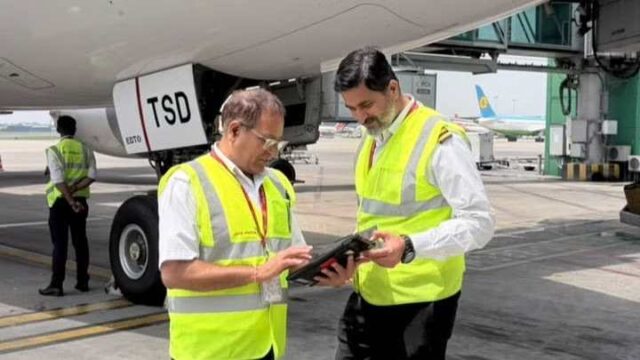
Air India has received approval from the Directorate General of Civil Aviation (DGCA) to use electronic technical logbooks (ETL) as the primary technical document for its Boeing 787 fleet, marking another milestone in the airline’s ongoing transformation programme.
The aviation regulator has also authorised the parallel implementation of the digital system across Air India’s Boeing 777 fleet, further advancing the airline’s technology-driven engineering and maintenance operations.
With the approval, Air India has become one of the first airlines to implement fleet-wide electronic technical logbooks across its entire Boeing 787 widebody fleet.
Replacing paper with digital records
The electronic technical logbook replaces conventional paper-based maintenance records with a secure digital platform that enables faster, more accurate and efficient management of aircraft maintenance and engineering activities.
The system allows real-time information sharing between maintenance engineers and operational teams, improving coordination, speeding up defect reporting and rectification, and enhancing aircraft dispatch reliability.
The digital platform also improves data integrity, traceability and regulatory compliance while providing advanced analytics to support predictive maintenance and informed engineering decisions.
In addition, the paperless system significantly reduces paper consumption, contributing to the airline’s sustainability goals.
Supporting operational excellence
The ETL implementation forms part of Air India’s broader digital transformation strategy aimed at modernising engineering and maintenance operations while maintaining the highest standards of safety and regulatory compliance.
The airline said the initiative will strengthen operational performance, improve reliability and reinforce its ambition of becoming a technology-enabled global carrier.
Upping maintenance governance
Air India Senior Vice President, Engineering & Maintenance, Jeremy Yew Jin Kit said, “The implementation of electronic technical logbooks across our widebody Boeing fleet reaffirms the collaborative work involving engineering, flight operations, digital technology teams, OEM partners and the regulator. Replacing paper-based processes with real-time digital information, we are improving operational efficiency, strengthening maintenance governance, enhancing regulatory compliance and enabling faster decision-making across our engineering and operations teams.”
Part of wider transformation
Air India said the latest approval reflects its continued investments in digital technologies to build a modern, data-driven aviation business focused on operational excellence and customer service.
The airline has been accelerating technology adoption across multiple functions as part of its ongoing transformation programme, with digital engineering tools playing an increasingly important role in improving efficiency, safety and fleet reliability.