


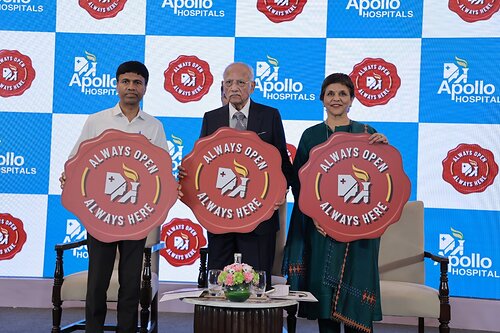
Apollo Hospitals Makes Routine Healthcare Available Seven Days A Week
Apollo Hospitals has launched ‘Always Open. Always Here.’, an initiative to make routine and planned healthcare services available across all seven days of the week, including Sundays, as it seeks to improve timely access to consultations, diagnostics and preventive care.
Emergency, critical care and inpatient services have always been available 24×7 across Apollo.
The new initiative extends Sunday access to outpatient consultations, diagnostics, preventive health checks, follow-up consultations and scheduled procedures, allowing patients to seek care without waiting for weekdays.
Focus shifts to preventive care
The initiative comes amid a rising burden of lifestyle diseases in India, including obesity, hypertension, diabetes and metabolic disorders, which are increasingly affecting people during their most productive years, according to Apollo’s Health of the Nation 2026 Report.
Apollo’s Zen Health Program offers comprehensive and advanced health assessments aimed at detecting early signs of disease, often before symptoms appear.
The initiative is designed to encourage people to prioritise preventive healthcare rather than wait for illness to require treatment.
Healthcare access expands
“For more than four decades, Apollo has believed that healthcare is not only about treating illness, but about protecting health and preventing disease. ‘Always Open. Always Here.’ is a continuation of that promise,” said Apollo Hospitals Group, Founder & Chairman, Dr. Prathap C. Reddy.
“We have always been available for emergencies and critical care. We are now extending the same commitment to routine and preventive care across all seven days of the week. This is our seal of service to every Indian,” he said.
Early intervention remains key
The initiative seeks to make healthcare more accessible to families and working professionals who may find it difficult to schedule routine consultations and preventive checks during weekdays. Sunday availability is expected to provide greater flexibility for planned healthcare needs.
“If one timely consultation helps detect disease early or prevent a crisis, we would have changed a life. If we inspire millions to choose care before crisis, we would have changed the future,” he said.