

Cars24 has delivered an unexpected disruption in India’s traditionally male-dominated automobile retail industry, and the numbers are backing it up.
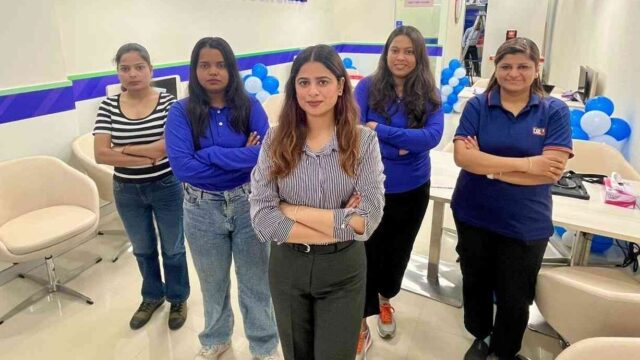
The company’s newly launched all-women automotive hub in Saket, Delhi, has emerged as the top-performing Cars24 outlet across the Delhi NCR region within just a month of operations.
The hub, located at DLF South Court in Saket, was launched as a pilot project with an entirely women-led workforce handling every aspect of the business, from sales and operations to financing and customer engagement.
Experiment challenges decades-old industry norms
For decades, India’s automotive retail ecosystem has largely remained male dominated, especially across showroom floors, financing desks and operational leadership roles.
Cars24 Group CEO Vikram Chopra believes the Saket hub has exposed a deeper structural issue within the industry, not a lack of capability among women, but a lack of opportunity.
According to Chopra, the company deliberately chose to run the hub under the same business targets, operational standards and accountability frameworks as every other Cars24 outlet.
The outcome surprised even the company.
Hub outperforms entire Delhi NCR network
The all-women Saket hub outperformed every other Cars24 hub in Delhi NCR during its first month of operations.
The outlet is currently selling more than 100 cars a month while clocking a financing penetration of 55%, making it one of the company’s strongest-performing retail centres in the region.
The pilot was designed not as a symbolic diversity initiative but as a full-scale operational test in one of Cars24’s most competitive markets.
Customer behaviour shifts on the showroom floor
Chopra said one of the key learnings from the pilot was how customer interactions evolved when the retail floor dynamics changed.
According to him, car buying in India has traditionally been perceived as a high-pressure experience. However, changing the composition of frontline teams altered customer engagement patterns significantly.
The company observed that conversations became less transactional, customer trust improved and the overall buying experience felt more approachable for a wider set of buyers, not just women customers.
Representation gap sparked internal introspection
Earlier this year, Chopra had publicly highlighted a gender imbalance within Cars24’s leadership structure.
Out of the company’s 6,803 employees, 951 were women, yet none held director-level positions at the time.
The Saket hub emerged as one of the company’s first concrete steps toward changing that narrative and building a stronger leadership pipeline for women within automotive operations.
Women-led operations prove operational depth
Cars24 said the women leading the Saket hub were selected purely on capability and readiness rather than diversity quotas.
Unlike token representation models, the hub operates without any male employees sharing operational responsibilities or stepping in during critical negotiations and deliveries.
The women-led team independently manages sales closures, financing discussions, deliveries and day-to-day customer operations.
According to the company, the success of the pilot has demonstrated that women can lead high-pressure automotive retail environments at scale when provided equal operational ownership.
Expansion plans move to Mumbai and Bengaluru
Encouraged by the early success of the Saket outlet, Cars24 is now preparing to expand the all-women hub model to Mumbai and Bengaluru.
The company is also exploring the inclusion of women mechanics within these hubs as part of a broader push to improve female participation across automotive operations.
Long-term goal is mainstream integration
While the Saket hub has generated significant attention, Chopra said the company’s long-term objective is to make such initiatives unremarkable rather than exceptional.
The broader ambition, according to Cars24, is to create an automotive industry where women leading operations, sales and service functions becomes standard business practice rather than a headline-worthy development.