


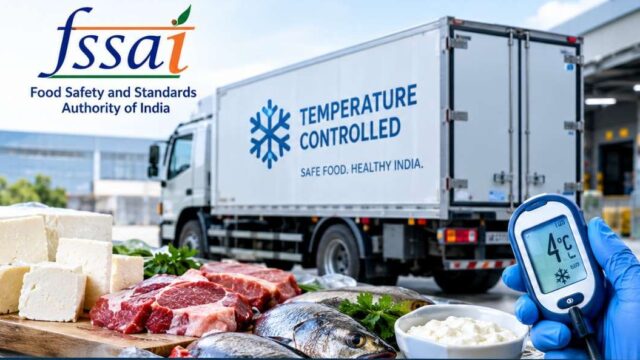
The Food Safety and Standards Authority of India (FSSAI) has directed food business operators (FBOs) to strictly maintain prescribed temperature conditions while handling, storing and transporting perishable food commodities, warning that violations could result in enforcement action, including seizure and destruction of products.
In an advisory dated October 15, 2026, the food safety regulator highlighted concerns over the handling of products such as khoa, paneer, meat and fish without appropriate temperature controls. Such foods are highly susceptible to microbial growth and spoilage if they are not maintained under suitable conditions.
The directive applies to businesses involved in the manufacture, packing, storage, transportation, distribution and sale of perishable food commodities.
Temperature control mandatory across supply chain
FSSAI said food businesses are required to maintain prescribed temperatures throughout the supply chain, from procurement and sourcing to delivery to the end consumer. This includes chilling, transportation, storage and distribution.
The requirements are stipulated under Schedule 4 of the Food Safety and Standards (Licensing and Registration of Food Businesses) Regulations, 2011. The regulator warned that exposure to inappropriate temperatures could compromise food safety and public health, amounting to non-compliance with the prescribed hygiene and sanitary requirements.
Clean vehicles, food-grade packaging required
The advisory directs food businesses to transport perishable commodities only in clean, covered and hygienic vehicles suitable for carrying food.
Operators must maintain the prescribed temperature conditions throughout storage and transportation and use food-grade packaging and suitable secondary packaging materials. Packing or transporting food in gunny bags or other non-food-grade coverings that could compromise product safety must be avoided.
Businesses have also been directed to protect products from dust, moisture, pests, physical damage and cross-contamination during storage, loading, unloading and transportation.
In addition, operators must maintain appropriate records and ensure traceability of consignments, including producing invoices and other relevant documents whenever demanded by the competent authority.
Inspections and enforcement to be tightened
FSSAI has asked food safety commissioners in all states and Union Territories, Indian Railways and its regional directors to instruct the relevant licensing authorities and food safety officers to maintain strict vigilance during inspections and transportation checks.
Appropriate action may be initiated against businesses found violating the provisions of the Food Safety and Standards Act, 2006, and the regulations framed under it. Such action could include seizure and destruction of food products.
The advisory was issued with the approval of the competent authority and signed by Dr Amit Sharma, Executive Director (Compliance Strategy), FSSAI.