


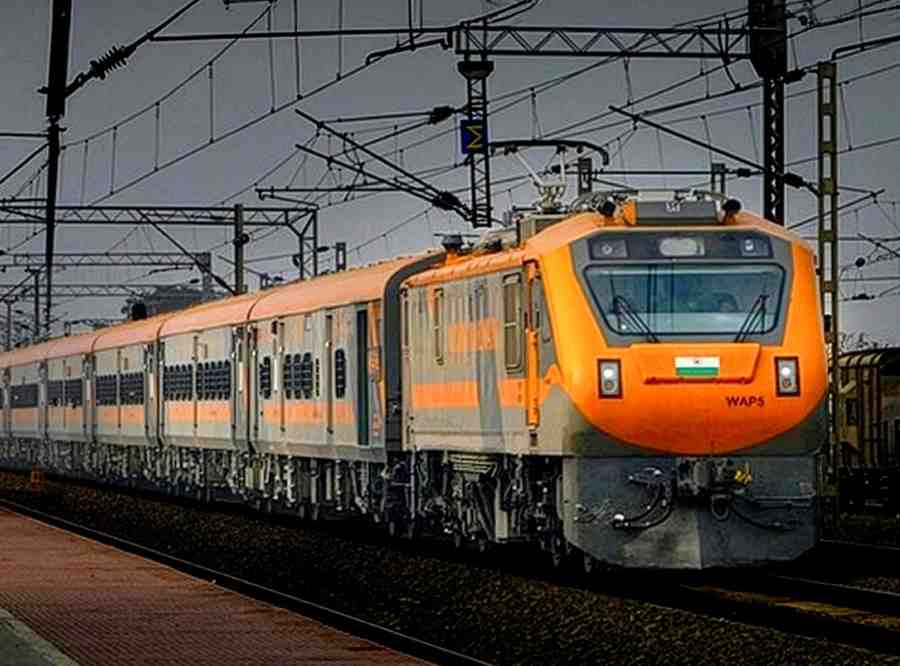
Indian Railways has made significant strides in track modernisation and safety enhancement over the last eleven years, reflecting a sustained push towards building a safer, faster, and more reliable rail ecosystem. Backed by consistent capital investment and mechanised execution, these efforts are transforming the backbone of India’s transport infrastructure at a time when railways are expected to play a central role in economic growth, logistics efficiency, and passenger mobility.
Track Renewal: Strengthening the Core Infrastructure
Track renewal remains a cornerstone of Indian Railways’ safety and reliability strategy. During FY2024–25, the national transporter completed 6,851 track kilometres (TKM) of track renewal. The momentum has continued into FY2025–26, with over 7,500 TKM of renewal work currently underway. Looking ahead, Indian Railways has already planned 7,900 TKM of track renewal for FY2026–27, signalling a sustained multi-year commitment rather than a one-off capex push.
From a business and infrastructure perspective, track renewal directly impacts asset life-cycle costs, derailment risk reduction, and operational efficiency. Modern rails, sleepers, and ballast systems allow for higher axle loads, faster train speeds, and reduced maintenance downtime- all of which are critical as freight and passenger traffic volumes rise.
Turnout and Switch Renewal: Improving Operational Fluidity
Beyond straight-line tracks, Indian Railways has focused on turnout renewal, a critical yet often underappreciated component of rail safety and network efficiency. Turnouts – which allow trains to move from one track to another -are high-stress points that demand advanced engineering solutions.
In FY2024–25, Indian Railways installed 7,161 Thick Web Switches (TWS) and 1,704 Weldable CMS Crossings. This effort is being scaled up in FY2025–26, with over 8,000 Thick Web Switches and more than 3,000 Weldable CMS Crossings under provision.
These modern components reduce wear and tear, improve ride quality, and enable smoother transitions at junctions — a key factor in improving average train speeds and timetable reliability, especially on high-density routes.
Mechanised Deep Screening: Enhancing Track Stability
Another critical pillar of the modernisation drive is mechanised deep screening of ballast, which improves track stability, drainage, and long-term performance. During FY2024–25, Indian Railways completed 7,442 TKM of deep screening work. In FY2025–26, over 7,500 TKM of deep screening is currently underway.
From an engineering standpoint, deep screening helps restore the elasticity of the track structure, reduces vibrations, and enhances passenger comfort. From a business lens, it lowers lifecycle maintenance costs and reduces service disruptions, making the rail network more dependable for both freight customers and passengers.
Expansion of Track Machine Fleet: Productivity Through Mechanisation
A major enabler of faster execution has been the rapid expansion of Indian Railways’ track machine fleet. Since 2014, more than 1,100 track machines have been procured, significantly increasing the pace and precision of maintenance activities.
This mechanisation push aligns with global best practices, allowing Indian Railways to maintain vast stretches of track with higher productivity, better quality control, and reduced dependence on manual labour, particularly in challenging operating conditions.
For equipment manufacturers and suppliers, this has also created a long-term demand pipeline across tamping machines, ballast regulators, and inspection systems.
Safety Fencing: Reducing Operational Risks
Safety enhancements have extended beyond track assets to include extensive fencing along railway corridors, aimed at reducing cattle run-over incidents and trespassing — two persistent operational risks.
So far, approximately 15,000 kilometres of fencing have been installed, particularly on sections where trains operate at speeds exceeding 110 kmph. This initiative not only improves passenger safety but also reduces operational delays, asset damage, and legal liabilities.
Faster Network: Doubling High-Speed-Ready Track Length
The cumulative impact of these initiatives is evident in the dramatic expansion of track capable of supporting higher speeds. In 2014, only 31,445 kilometres – around 40% of the network — permitted speeds of 110 kmph and above. Today, that figure has risen to 84,244 kilometres, covering nearly 80 per cent of the network.
Railways’ track modernisation programme reflects a shift from reactive maintenance to predictive, asset-led infrastructure management. For the broader economy, this translates into improved logistics efficiency and lower freight costs, greater reliability for time-sensitive cargo and enhanced passenger experience on long-distance routes.
For industry stakeholders, including steel producers, equipment manufacturers, EPC contractors, and technology providers, the sustained scale of investment provides long-term visibility and stable demand.