


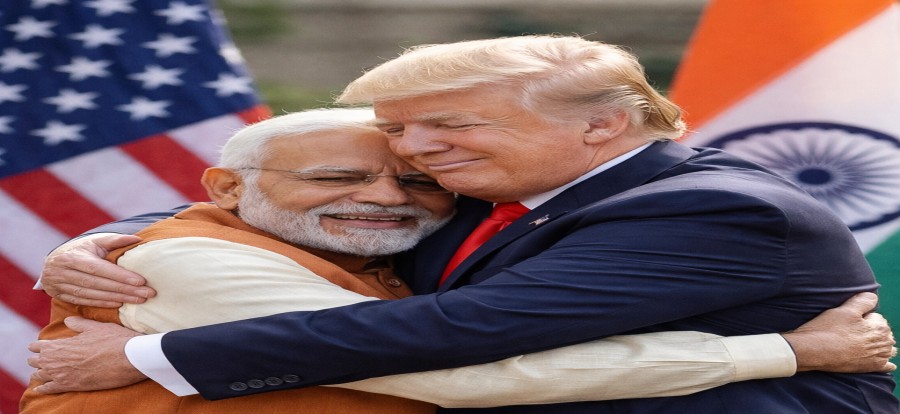
In a major development reshaping bilateral trade dynamics, the United States and India have reached a trade agreement that significantly lowers US tariffs on Indian imports while signalling potential shifts in energy sourcing and market access.
At the centre of the deal is a reduction of the US reciprocal tariff on Indian goods, cut from 25% to 18%, effective immediately according to US President Donald Trump’s announcement. This move follows a period of elevated tariff barriers that had reached as high as 50% due to earlier punitive duties tied to India’s energy imports, particularly Russian crude. Prime Minister Narendra Modi welcomed the tariff reduction, emphasising its positive impact on “Made in India” exports and bilateral economic cooperation.
President Trump linked the trade deal to India’s commitment to adjust its energy sourcing strategy. The US has framed the tariff concession in the context of India reducing purchases of Russian oil and instead increasing imports of American energy products, with possible inclusion of Venezuelan supplies. While specifics about these commitments and timelines remain to be clarified by official Indian policy statements, the linkage underlines the growing geopolitics of energy trade.
Analysts and industry players have interpreted the tariff cut as a welcome easing of trade friction, potentially boosting export competitiveness and restoring sentiment that had been dampened since the mid-2025 tariff escalation. From a structural perspective, the tariff adjustment and associated developments could have several implications:
An 18% duty places Indian exports at a more competitive level relative to regional peers, offering potential ballast for labour-intensive sectors that had been hit by steep levies.
If India increases energy imports from the US, there could be long-term shifts in crude sourcing patterns, with implications for refineries, logistics and bilateral trade balances.
Despite the headline tariff rate reduction, several aspects of the trade deal remain unclarified. Details on product-specific tariffs and implementation timelines await formal government notifications from both sides. Claims about India potentially reducing tariffs and non-tariff barriers on US goods to zero have been publicly referenced but not yet confirmed through official legal text.
Statements by US leadership about large-scale purchase commitments, reportedly exceeding $500 billion, have not been officially corroborated by Indian ministries, and interpretation varies between political messaging and measurable contractual obligations.
The US–India trade deal marks a notable shift in bilateral economic engagement, easing tariff tensions and signalling deeper commercial and strategic cooperation. While key details remain under negotiation or clarification, the tariff reduction alone is poised to benefit exporters, ease market tensions and strengthen investor confidence. Continued monitoring of formal agreements and policy notifications will be essential for businesses operating in affected sectors.