


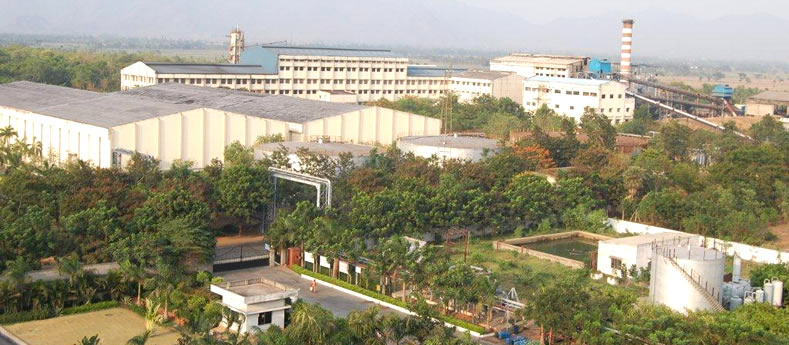
Murugappa Group company EID Parry (India) Ltd has announced the immediate shutdown of the sugar refinery unit run by its wholly-owned subsidiary Parry Sugars Refinery India Pvt Ltd (PSRIPL) at Vakalapudi in Kakinada, citing sustained losses and a mounting debt burden.
To settle the subsidiary’s liabilities following the closure, the parent company will infuse substantial funds through a mix of equity and loans.
₹740 crore support planned to address liabilities
As of March 31, 2026, PSRIPL’s total estimated liabilities stand at ₹998 crore, including ₹877 crore in bank borrowings backed by corporate support. Based on expected asset realisations, the subsidiary anticipates repaying around ₹137 crore of these borrowings.
The remaining ₹740 crore will be settled through fresh equity infusion and loans from EID Parry. The company estimates that it will need to create provisions of approximately ₹655 crore across FY26 and FY27. In addition, it will impair ₹46 crore, representing the current carrying value of its investment in PSRIPL.
EID Parry has stated that it has adequate financial resources to meet these commitments.
Board clears equity infusion and loan support
The board of directors of EID Parry has approved an investment of up to ₹610 crore in equity shares of PSRIPL, to be made in one or more tranches. It has also cleared an inter-corporate loan of up to ₹130 crore, which will similarly be disbursed in tranches.
These steps are intended to facilitate an orderly settlement of liabilities following the shutdown of operations.
Unit established as export-oriented refinery
PSRIPL had set up the sugar refinery at Vakalapudi in East Godavari district, Kakinada, in 2006 as a 2,000 tonnes-per-day (TPD) SEZ-based export-oriented unit. The business model was built around importing raw sugar, refining it into white sugar, and exporting it to global markets where white sugar commanded a premium.
Structural shifts undermined business model
At the time of conceptualisation, the project was supported by favourable global white sugar premiums and the assured availability of natural gas at Kakinada. The economics also factored in surplus power generation and its sale to the grid at commercially attractive tariffs.
However, over the years, several structural changes significantly weakened the business model. The non-availability of natural gas forced the company to invest in coal-based operations, leading to higher costs. At the same time, a sharp decline in global white sugar premiums reduced margins, while revenue from power exports fell to nearly one-third of the original projections.
Operational challenges and losses mount
The refinery also faced multiple operational and financial challenges that compounded its stress. These included periodic shutdowns due to factory accidents, substantial demurrage charges, inventory write-offs, hedging losses, and high finance costs.
Together, these factors led to a sharp rise in accumulated losses, which stood at approximately ₹1,406 crore as of March 31, 2025. The company added that the current geopolitical environment remains highly challenging, further impacting the business outlook.