

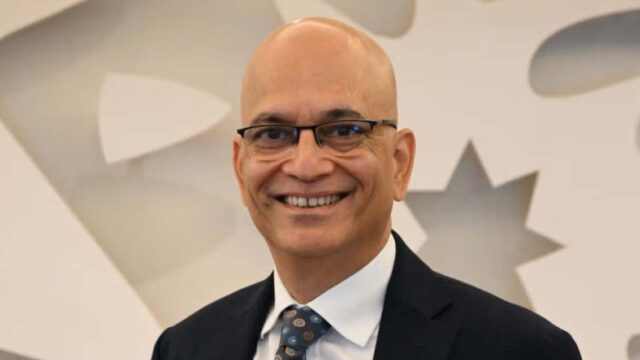
Hindustan Unilever Ltd (HUL) is building a future-ready business by strengthening its supply chain, accelerating digital and AI adoption, expanding premium offerings, and deepening its sustainability initiatives, Chairman Nitin Paranjpe said while addressing shareholders at the company’s Annual General Meeting on Tuesday.
Paranjpe said the FMCG major is creating an interconnected ecosystem that integrates consumers, customers and operations through data, technology and analytics to improve agility and resilience.
Project Nakshatra to reshape supply chain
The company has been sourcing the majority of its raw materials locally for several years, helping the company navigate global disruptions while ensuring supply continuity.
HUL is now transforming its manufacturing and distribution network through Project Nakshatra, a multi-year supply chain transformation programme.
Under the initiative, HUL is establishing multi-category and multi-format factories closer to demand centres, co-locating suppliers and warehouses, and deploying nano factories capable of rapid production changeovers.
According to the company, the objective is to create a supply chain that balances efficiency with flexibility, enabling it to absorb disruptions, reroute operations in real time and continue serving consumers efficiently.
Premiumisation and quick commerce remain growth drivers
Paranjpe said HUL continues to pursue premiumisation across categories by offering products that cater to evolving consumer preferences.
He cited TRESemmé as an example of consumers upgrading to specialised haircare solutions, while Surf excel Matic Express, introduced this year, addresses rising demand for faster and more convenient laundry solutions by cleaning clothes in just 15 minutes.
The chairman also noted that bodywash has become the fastest-growing format in the skin cleansing category, with brands such as Dove, Pears and LUX serving consumers across different price points.
Recognising the rapid rise of quick commerce in urban India, HUL has established a dedicated business unit to cater specifically to the channel.
Paranjpe said affluent urban consumers are increasingly shifting from planned shopping to instant fulfilment, making quick commerce an important strategic growth avenue.
The company is also strengthening its presence across social commerce and direct-to-consumer (D2C) channels by combining its network of more than 9 million retail outlets with digital intelligence to better respond to changing consumer buying patterns.
Sustainability initiatives gather momentum
Sustainability remains central to its long-term business strategy. Paranjpe highlighted that 97% of the company’s manufacturing operations have transitioned to renewable energy, with 16 manufacturing sites now operating entirely on renewable power.
The Hindustan Unilever Foundation has created more than 4.5 trillion litres of cumulative water potential through water management initiatives, while regenerative agriculture practices have been implemented across more than 61,000 hectares.
The company is also investing in building ecosystem capabilities to increase recycled content in packaging, particularly flexible plastics.
AI embedded across the organisation
Paranjpe said HUL is embedding digital and artificial intelligence capabilities across every business function rather than limiting them to technology teams.
The company is using AI across marketing, manufacturing, finance, field sales and supply chain operations to augment employee productivity and improve decision-making.
HUL is also investing in partnerships with technology-led companies, capability development programmes and cross-functional career opportunities to prepare its workforce for future business needs.