


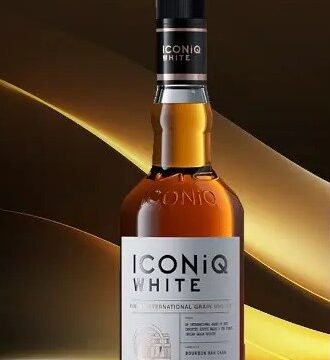
Allied Blenders Charts Growth Through Premiumisation and Backward Integration
How did a single-brand organisation Allied Blenders & Distillers Ltd. (ABDL) turn into a diversified spirits company with multiple categories and price points?
It is through continued focus on relevance, innovation and sustainable value creation, said its Chairman Kishore R. Chhabria in the company’s latest annual report.
Starting with a single Officer’s Choice whisky label in 1988, ABDL turned into a multi-brand spirits company by distilling whisky, brandy, rum, zin and vodka across categories with different price points.
In FY26, the company reported revenue of ₹3,949 crore and has emerged as one of India’s leading spirits companies and the country’s largest liquor exporter by volume.
Growth strategy
“We are aggressively expanding our footprint across premium and luxury segments, modernising consumer engagement via a highly responsive route-to-market, and securing our supply chain through targeted backward integration. This strategic reset forms the backbone of our next phase of growth,” he said.
The company’s strategy is centred on premiumisation, portfolio diversification, distribution expansion and strengthening supply-chain capabilities. It aims to build a larger presence in premium and luxury segments while enhancing operational efficiencies through investments across the value chain.
ABDL’s stated vision is to be among the world’s most admired spirits companies through innovation, transparency, ethics and brand building.
Capital expenditure programme
ABDL’s capital expenditure programme focuses on strengthening backward integration, securing critical raw materials and expanding manufacturing capabilities across key markets.
Investments are being made in extra neutral alcohol (ENA), malt, PET and bottling infrastructure to improve supply-chain resilience, reduce sourcing dependence and support profitable growth. The programme is being implemented through a phased capital allocation framework focused on cost optimisation and operating efficiencies.
According to the annual report, the ongoing projects are expected to improve EBITDA margins by about 300 basis points by FY28 and a further 100 basis points by FY29.
Expansion plans
Phase I is focused on enhancing captive integration across ENA, PET and malt production to improve supply security and create structural cost advantages.
Phase II comprises investments in manufacturing and bottling facilities across key growth markets. These projects are expected to strengthen downstream integration, improve manufacturing efficiencies and support scalable growth.
The company identified premiumisation, profitability, backward integration and return on capital employed as key priorities as it builds a future-ready organisation and expands its presence in domestic and overseas markets.
Future outlook
The outlook for the Indian alcoholic beverages industry remains positive, supported by structural drivers such as premiumisation, favourable demographics and increasing consumer aspiration.
Navigating this dynamic landscape requires constant agility to manage regulatory complexities, evolving market conditions, and state-level policy shifts.
As ABDL embarks on its transformation journey, we view these market shifts as catalysts to accelerate our evolution and capture new vectors of value, he said.