


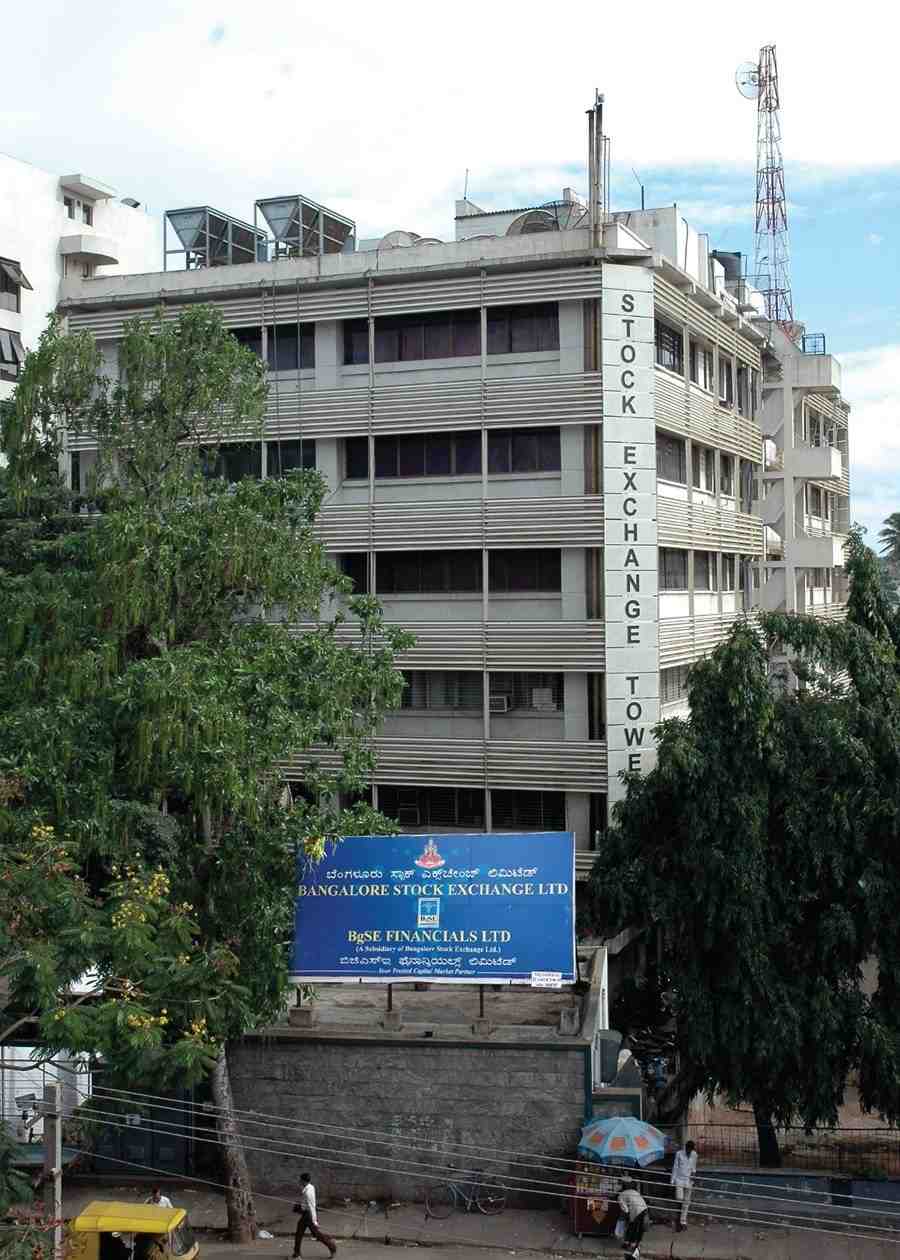
A Celebration That Turned Reflective
What could have been a fitting grand celebration of two iconic institutions that once symbolised credibility and commerce, the United News of India (UNI) and the Bangalore Stock Exchange (BgSE), in the garden city last week turned into a poignant reminder of time’s passage.
The absence of familiar faces and fading institutional memory overshadowed what should have been a moment of pride and nostalgia. UNI’s veterans have largely retired or passed on, while the lineage of second- and third-generation stockbrokers, who once animated BgSE has thinned, taking with them stories that rarely make it to record.
Two former UNI journalists, who covered BgSE and other corporates, recalls the hey day and their participation. They were instrumental in shifting BgSE to the UNI Building and even in renaming the Bangalore Stock Exchange as BgSE, an example of how reportage and institutions often evolved together.
Parallel Legacies
Founded in December 1959 and operational from March 21, 1961, UNI emerged from New Delhi as a formidable alternative in India’s news ecosystem. BgSE, incorporated in 1957 and recognised on March 17, 1963, grew in parallel as a hub for regional capital market activity.
The Age of Ink and Trade
Those were the days of teleprinters, typewriters, telex and telegrams, when news travelled in bursts of ink and paper. UNI’s newsroom was a mosaic of languages, English, Hindi, Urdu, and more, later expanding into photo, graphics, agriculture, and financial services. Computers arrived in 1987, but the transition proved uneven.
BgSE, meanwhile, scripted its own innovations. From its early days in Unity Building and later at the UNI Building, it built a vibrant trading culture, supported by its clearing arrangement with Canara Bank. It pioneered a full-fledged library, electronic trading through BEST in 1996, and early investor grievance and protection mechanisms.
Shared Milestones
Both institutions shared significant milestones. UNI marked its silver jubilee in 1986 and BgSE in 1988. In the 1990’s, BgSE moved into UNI’s building in Bengaluru, occupying dedicated floors for trading, administration, and its library, symbolising a unique institutional convergence.
The Inevitable Decline
But change proved unforgiving. UNI’s decline stemmed from mounting debts, shrinking clientele, and delayed modernisation, worsened by the loss of key properties. BgSE, too, struggled as trading consolidated in the Bombay Stock Exchange and the National Stock Exchange. Regulatory norms set by the Securities and Exchange Board of India further hastened its exit from trading in 2014.
Yet BgSE adapted, continuing through BgSE Financial Services with memberships in larger exchanges. UNI’s trajectory has been more uncertain, with developments such as the seizure of its Rafi Marg property underscoring its decline.
A Story of Ecosystems
The story of UNI and BgSE is ultimately about ecosystems, journalists, traders, and institutions shaped by their time. Bengaluru has moved on, but in quieter corners, their legacy endures.
The decline also underscores a broader transformation in the media industry, where traditional news agencies have struggled to remain relevant amid digital disruption and changing consumption patterns.
The Changing Nature of Institutions
The muted response to the event reflects a larger shift in how institutions are perceived and remembered. In an era driven by speed, technology, and constant change, legacy organisations often struggle to retain their emotional connect with newer generations.
Both UNI and BgSE were not just institutions; they were communities. UNI nurtured journalists and shaped narratives, while BgSE created a marketplace that enabled economic activity and wealth creation. Their decline is not merely about organisational failure but about the erosion of shared experiences that once bound professionals together.
With the passage of time, Bengaluru has moved on, but in quieter corners, their legacy endures as a reminder that relevance, once lost, is rarely reclaimed.