


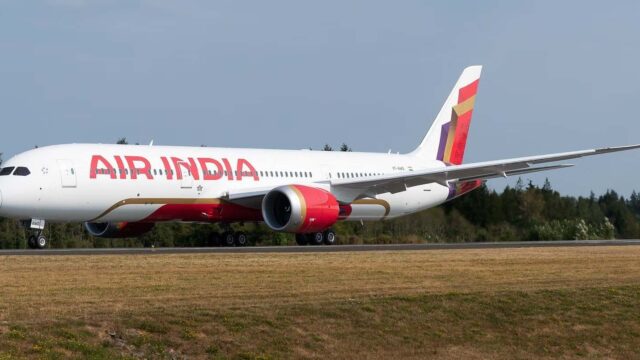
When Air India’s newest Boeing 787-9, VT-AWD, arrived in Delhi, it marked another milestone in the airline’s transformation journey. But behind the aircraft’s arrival lies months of engineering, customisation, inspection and testing aimed at ensuring it meets Air India’s standards for safety, quality and customer experience.
Chief Engineer Yuvraj Puri, who led Air India’s acceptance of VT-AWD from Boeing in Everett, Washington, has been closely involved in the airline’s fleet renewal programme.
“What was there on paper is now there in front of us. Those changes are in front of me and very soon our passengers will be experiencing this new product,” Puri said.
With more than 20 years of aviation experience and nearly a decade within the Tata aviation ecosystem, Puri said the arrival of VT-AWD was particularly significant as it was Air India’s fourth line-fit Boeing 787-9 delivered within around six months.
“I was really amazed and really happy about the pace at which we are getting aircraft. It’s already four aircraft and it is just half a year,” he said, describing the delivery as a significant milestone in Air India’s transformation.
From specifications to a finished aircraft
The acceptance journey begins long before an aircraft reaches the delivery centre.
Once an aircraft order is placed, Air India teams work with Boeing to define specifications covering everything from cabin interiors and systems to avionics, engines and other technical aspects.
Engineers, product specialists, customer experience teams and operational experts collectively shape the aircraft that passengers eventually experience.
On VT-AWD, passenger-focused features include Bluetooth-enabled inflight entertainment systems across Economy, Premium Economy and Business Class, allowing passengers to connect wireless headphones directly to seatback screens.
The aircraft also features electronically dimmable windows that can be controlled through the inflight entertainment system.
Hundreds of checks before acceptance
By the time Air India’s representatives arrive in Everett, Boeing has completed aircraft testing, multiple test flights and regulatory evaluations. The airline’s acceptance team then carries out its own comprehensive inspection.
“Once Boeing invites Air India representatives, we start inspecting the airplane from all aspects,” Puri said, adding that checks cover technical and airworthiness aspects, flight controls and customer touchpoints.
The delivery team includes specialists from engineering, flight operations, customer experience and product functions. Business-class seats, inflight entertainment, cabin lighting, controls, electronics, lavatories and other passenger-facing features are tested, alongside critical technical systems.
The process involves approximately 400 to 500 inspection points before Air India accepts the aircraft.
Testing continues in the air
Ground checks are followed by flight testing, allowing engineers to assess aircraft systems under conditions that cannot be replicated on the ground, including cabin pressurisation, temperature changes and flight loads.
“While everything may look okay on ground, things may change when the airplane starts flying,” Puri said.
The aircraft also undergoes Boeing certification and testing under the oversight of the US Federal Aviation Administration (FAA). Before entering commercial service in India, it must meet the requirements of the Directorate General of Civil Aviation (DGCA).
Safety remains paramount
For Puri, every layer of inspection provides additional assurance for passengers.
“Safety comes the number one thing for us. After safety is quality, airworthiness and then customer experience,” he said.
After inspections, testing and regulatory reviews are completed, the final ferry flight to India becomes a moment of pride for the delivery team.
“You feel very possessive about your plane,” Puri said, comparing the experience to carefully driving a brand-new car home.
With VT-AWD now part of Air India’s growing fleet, the aircraft’s arrival represents not only another addition to the airline’s network but also the culmination of extensive work by engineers, pilots, product specialists, regulators and manufacturer teams.
For the teams involved, the Dreamliner’s arrival in Delhi marks both the completion of one journey and the beginning of another, carrying Air India passengers around the world.